






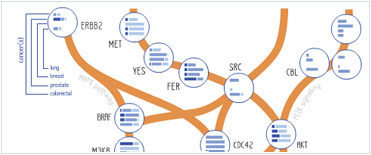








 Foundational characteristics of cancer include proliferation, angiogenesis, migration, evasion of apoptosis, and cellular immortality. Find key markers for these cellular processes and antibodies to detect them.
 The SUMOplot™ Analysis Program predicts and scores sumoylation sites in your protein. SUMOylation is a post-translational modification involved in various cellular processes, such as nuclear-cytosolic transport, transcriptional regulation, apoptosis, protein stability, response to stress, and progression through the cell cycle.
 The Autophagy Receptor Motif Plotter predicts and scores autophagy receptor binding sites in your protein. Identifying proteins connected to this pathway is critical to understanding the role of autophagy in physiological as well as pathological processes such as development, differentiation, neurodegenerative diseases, stress, infection, and cancer.
Goat Anti-ABCD4 Antibody
Peptide-affinity purified goat antibody

- SPECIFICATION
- CITATIONS
- PROTOCOLS
- BACKGROUND

Application 
| WB, E |
|---|---|
| Primary Accession | O14678 |
| Other Accession | NP_005041, 5826, 19300 (mouse), 299196 (rat) |
| Reactivity | Human |
| Predicted | Mouse, Rat, Dog |
| Host | Goat |
| Clonality | Polyclonal |
| Concentration | 100ug/200ul |
| Isotype | IgG |
| Calculated MW | 68597 Da |
| Gene ID | 5826 |
|---|---|
| Other Names | ATP-binding cassette sub-family D member 4, PMP70-related protein, P70R, Peroxisomal membrane protein 1-like, PXMP1-L, Peroxisomal membrane protein 69, PMP69, ABCD4, PXMP1L |
| Format | 0.5 mg IgG/ml in Tris saline (20mM Tris pH7.3, 150mM NaCl), 0.02% sodium azide, with 0.5% bovine serum albumin |
| Storage | Maintain refrigerated at 2-8°C for up to 6 months. For long term storage store at -20°C in small aliquots to prevent freeze-thaw cycles. |
| Precautions | Goat Anti-ABCD4 Antibody is for research use only and not for use in diagnostic or therapeutic procedures. |
| Name | ABCD4 (HGNC:68) |
|---|---|
| Synonyms | PXMP1L |
| Function | Lysosomal membrane protein that transports cobalamin (Vitamin B12) from the lysosomal lumen to the cytosol in an ATP-dependent manner (PubMed:22922874, PubMed:33845046, PubMed:28572511, PubMed:31467407). Targeted by LMBRD1 lysosomal chaperone from the endoplasmic reticulum to the lysosomal membrane (PubMed:27456980). Then forms a complex with lysosomal chaperone LMBRD1 and cytosolic MMACHC to transport cobalamin across the lysosomal membrane (PubMed:25535791). |
| Cellular Location | Endoplasmic reticulum membrane; Multi-pass membrane protein. Lysosome membrane; Multi-pass membrane protein. Note=Targeted by LMBRD1 lysosomal chaperone to the lysosomal membrane. |
| Tissue Location | Ubiquitous. |

Thousands of laboratories across the world have published research that depended on the performance of antibodies from Abcepta to advance their research. Check out links to articles that cite our products in major peer-reviewed journals, organized by research category.
info@abcepta.com, and receive a free "I Love Antibodies" mug.

Provided below are standard protocols that you may find useful for product applications.
Background
The protein encoded by this gene is a member of the superfamily of ATP-binding cassette (ABC) transporters. ABC proteins transport various molecules across extra- and intra-cellular membranes. ABC genes are divided into seven distinct subfamilies (ABC1, MDR/TAP, MRP, ALD, OABP, GCN20, White). This protein is a member of the ALD subfamily, which is involved in peroxisomal import of fatty acids and/or fatty acyl-CoAs in the organelle. All known peroxisomal ABC transporters are half transporters which require a partner half transporter molecule to form a functional homodimeric or heterodimeric transporter. The function of this peroxisomal membrane protein is unknown. However, it is speculated that it may function as a heterodimer for another peroxisomal ABC transporter and, therefore, may modify the adrenoleukodystrophy phenotype. It may also play a role in the process of peroxisome biogenesis. Alternative splicing results in at least two different transcript variants, one which is protein-coding and one which is probably not protein-coding.
References
Identification of novel SNPs of ABCD1, ABCD2, ABCD3, and ABCD4 genes in patients with X-linked adrenoleukodystrophy (ALD) based on comprehensive resequencing and association studies with ALD phenotypes. Matsukawa T, et al. Neurogenetics, 2010 Jul 27. PMID 20661612.
Association study between single-nucleotide polymorphisms in 199 drug-related genes and commonly measured quantitative traits of 752 healthy Japanese subjects. Saito A, et al. J Hum Genet, 2009 Jun. PMID 19343046.
Toward a confocal subcellular atlas of the human proteome. Barbe L, et al. Mol Cell Proteomics, 2008 Mar. PMID 18029348.
Diversification of transcriptional modulation: large-scale identification and characterization of putative alternative promoters of human genes. Kimura K, et al. Genome Res, 2006 Jan. PMID 16344560.
A human protein-protein interaction network: a resource for annotating the proteome. Stelzl U, et al. Cell, 2005 Sep 23. PMID 16169070.

If you have used an Abcepta product and would like to share how it has performed, please click on the "Submit Review" button and provide the requested information. Our staff will examine and post your review and contact you if needed.
If you have any additional inquiries please email technical services at tech@abcepta.com.

Ordering Information
Other Products
Shipping Information
