






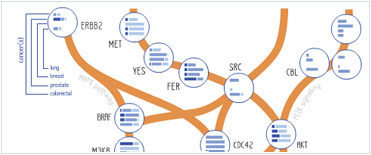








 Foundational characteristics of cancer include proliferation, angiogenesis, migration, evasion of apoptosis, and cellular immortality. Find key markers for these cellular processes and antibodies to detect them.
 The SUMOplot™ Analysis Program predicts and scores sumoylation sites in your protein. SUMOylation is a post-translational modification involved in various cellular processes, such as nuclear-cytosolic transport, transcriptional regulation, apoptosis, protein stability, response to stress, and progression through the cell cycle.
 The Autophagy Receptor Motif Plotter predicts and scores autophagy receptor binding sites in your protein. Identifying proteins connected to this pathway is critical to understanding the role of autophagy in physiological as well as pathological processes such as development, differentiation, neurodegenerative diseases, stress, infection, and cancer.
Goat Anti-Androgen Receptor Antibody
Peptide-affinity purified goat antibody
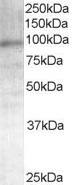
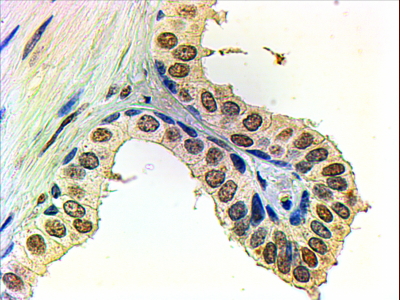

- SPECIFICATION
- CITATIONS
- PROTOCOLS
- BACKGROUND

Application 
| WB, IHC, E |
|---|---|
| Primary Accession | P10275 |
| Other Accession | NP_000035, 367, 11835 (mouse), 24208 (rat) |
| Reactivity | Human |
| Predicted | Mouse, Rat, Pig, Dog, Cow |
| Host | Goat |
| Clonality | Polyclonal |
| Concentration | 100ug/200ul |
| Isotype | IgG |
| Calculated MW | 99188 Da |
| Gene ID | 367 |
|---|---|
| Other Names | Androgen receptor, Dihydrotestosterone receptor, Nuclear receptor subfamily 3 group C member 4, AR, DHTR, NR3C4 |
| Format | 0.5 mg IgG/ml in Tris saline (20mM Tris pH7.3, 150mM NaCl), 0.02% sodium azide, with 0.5% bovine serum albumin |
| Storage | Maintain refrigerated at 2-8°C for up to 6 months. For long term storage store at -20°C in small aliquots to prevent freeze-thaw cycles. |
| Precautions | Goat Anti-Androgen Receptor Antibody is for research use only and not for use in diagnostic or therapeutic procedures. |
| Name | AR |
|---|---|
| Synonyms | DHTR, NR3C4 |
| Function | Steroid hormone receptors are ligand-activated transcription factors that regulate eukaryotic gene expression and affect cellular proliferation and differentiation in target tissues (PubMed:19022849). Transcription factor activity is modulated by bound coactivator and corepressor proteins like ZBTB7A that recruits NCOR1 and NCOR2 to the androgen response elements/ARE on target genes, negatively regulating androgen receptor signaling and androgen-induced cell proliferation (PubMed:20812024). Transcription activation is also down-regulated by NR0B2. Activated, but not phosphorylated, by HIPK3 and ZIPK/DAPK3. |
| Cellular Location | Nucleus. Cytoplasm Note=Detected at the promoter of target genes (PubMed:25091737) Predominantly cytoplasmic in unligated form but translocates to the nucleus upon ligand-binding. Can also translocate to the nucleus in unligated form in the presence of RACK1. |
| Tissue Location | [Isoform 2]: Mainly expressed in heart and skeletal muscle. |

Thousands of laboratories across the world have published research that depended on the performance of antibodies from Abcepta to advance their research. Check out links to articles that cite our products in major peer-reviewed journals, organized by research category.
info@abcepta.com, and receive a free "I Love Antibodies" mug.

Provided below are standard protocols that you may find useful for product applications.
Background
The androgen receptor gene is more than 90 kb long and codes for a protein that has 3 major functional domains: the N-terminal domain, DNA-binding domain, and androgen-binding domain. The protein functions as a steroid-hormone activated transcription factor. Upon binding the hormone ligand, the receptor dissociates from accessory proteins, translocates into the nucleus, dimerizes, and then stimulates transcription of androgen responsive genes. This gene contains 2 polymorphic trinucleotide repeat segments that encode polyglutamine and polyglycine tracts in the N-terminal transactivation domain of its protein. Expansion of the polyglutamine tract causes spinal bulbar muscular atrophy (Kennedy disease). Mutations in this gene are also associated with complete androgen insensitivity (CAIS). Two alternatively spliced variants encoding distinct isoforms have been described.
References
Depressive Symptoms in Men Aged 50 Years and Older and Their Relationship to Genetic Androgen Receptor Polymorphism and Sex Hormone Levels in Three Different Samples. Schneider G, et al. Am J Geriatr Psychiatry, 2010 Jun 25. PMID 20808127.
Germline study of AR gene of Indian women with ovarian failure. Panda B, et al. Gynecol Endocrinol, 2010 Jul 30. PMID 20672904.
Bone mass and the CAG and GGN androgen receptor polymorphisms in young men. Guadalupe-Grau A, et al. PLoS One, 2010 Jul 12. PMID 20634949.
Comprehensive analysis of common genetic variation in 61 genes related to steroid hormone and insulin-like growth factor-I metabolism and breast cancer risk in the NCI breast and prostate cancer cohort consortium. Canzian F, et al. Hum Mol Genet, 2010 Oct 1. PMID 20634197.
Polymorphisms in the AR and PSA Genes as Markers of Susceptibility and Aggressiveness in Prostate Cancer. Kuasne H, et al. Cancer Invest, 2010 Jul 15. PMID 20632874.

If you have used an Abcepta product and would like to share how it has performed, please click on the "Submit Review" button and provide the requested information. Our staff will examine and post your review and contact you if needed.
If you have any additional inquiries please email technical services at tech@abcepta.com.

Ordering Information
Other Products
Shipping Information
