






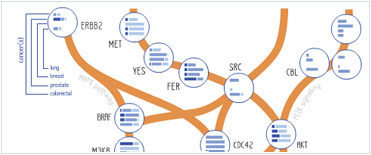








 Foundational characteristics of cancer include proliferation, angiogenesis, migration, evasion of apoptosis, and cellular immortality. Find key markers for these cellular processes and antibodies to detect them.
 The SUMOplot™ Analysis Program predicts and scores sumoylation sites in your protein. SUMOylation is a post-translational modification involved in various cellular processes, such as nuclear-cytosolic transport, transcriptional regulation, apoptosis, protein stability, response to stress, and progression through the cell cycle.
 The Autophagy Receptor Motif Plotter predicts and scores autophagy receptor binding sites in your protein. Identifying proteins connected to this pathway is critical to understanding the role of autophagy in physiological as well as pathological processes such as development, differentiation, neurodegenerative diseases, stress, infection, and cancer.
Goat Anti-APOBEC3G Antibody
Peptide-affinity purified goat antibody
- SPECIFICATION
- CITATIONS
- PROTOCOLS
- BACKGROUND

Application 
| WB, E |
|---|---|
| Primary Accession | Q9HC16 |
| Other Accession | NP_068594, 60489 |
| Reactivity | Human |
| Host | Goat |
| Clonality | Polyclonal |
| Concentration | 100ug/200ul |
| Isotype | IgG |
| Calculated MW | 46408 Da |
| Gene ID | 60489 |
|---|---|
| Other Names | DNA dC->dU-editing enzyme APOBEC-3G, 3.5.4.-, APOBEC-related cytidine deaminase, APOBEC-related protein, ARCD, APOBEC-related protein 9, ARP-9, CEM-15, CEM15, Deoxycytidine deaminase, A3G, APOBEC3G |
| Format | 0.5 mg IgG/ml in Tris saline (20mM Tris pH7.3, 150mM NaCl), 0.02% sodium azide, with 0.5% bovine serum albumin |
| Storage | Maintain refrigerated at 2-8°C for up to 6 months. For long term storage store at -20°C in small aliquots to prevent freeze-thaw cycles. |
| Precautions | Goat Anti-APOBEC3G Antibody is for research use only and not for use in diagnostic or therapeutic procedures. |
| Name | APOBEC3G |
|---|---|
| Function | DNA deaminase (cytidine deaminase) which acts as an inhibitor of retrovirus replication and retrotransposon mobility via deaminase- dependent and -independent mechanisms. Exhibits potent antiviral activity against Vif-deficient HIV-1. After the penetration of retroviral nucleocapsids into target cells of infection and the initiation of reverse transcription, it can induce the conversion of cytosine to uracil in the minus-sense single-strand viral DNA, leading to G-to-A hypermutations in the subsequent plus-strand viral DNA. The resultant detrimental levels of mutations in the proviral genome, along with a deamination-independent mechanism that works prior to the proviral integration, together exert efficient antiretroviral effects in infected target cells. Selectively targets single-stranded DNA and does not deaminate double-stranded DNA or single- or double-stranded RNA. Exhibits antiviral activity also against simian immunodeficiency viruses (SIVs), hepatitis B virus (HBV), equine infectious anemia virus (EIAV), xenotropic MuLV-related virus (XMRV) and simian foamy virus (SFV). May inhibit the mobility of LTR and non-LTR retrotransposons. |
| Cellular Location | Cytoplasm. Nucleus. Cytoplasm, P-body. Note=Mainly cytoplasmic. Small amount are found in the nucleus. During HIV-1 infection, virion-encapsidated in absence of HIV-1 Vif |
| Tissue Location | Expressed in spleen, testes, ovary and peripheral blood leukocytes and CD4+ lymphocytes. Also expressed in non-permissive peripheral blood mononuclear cells, and several tumor cell lines; no expression detected in permissive lymphoid and non-lymphoid cell lines Exists only in the LMM form in peripheral blood-derived resting CD4 T- cells and monocytes, both of which are refractory to HIV-1 infection LMM is converted to a HMM complex when resting CD4 T-cells are activated or when monocytes are induced to differentiate into macrophages. This change correlates with increased susceptibility of these cells to HIV-1 infection. |

Thousands of laboratories across the world have published research that depended on the performance of antibodies from Abcepta to advance their research. Check out links to articles that cite our products in major peer-reviewed journals, organized by research category.
info@abcepta.com, and receive a free "I Love Antibodies" mug.

Provided below are standard protocols that you may find useful for product applications.
Background
This gene is a member of the cytidine deaminase gene family. It is one of seven related genes or pseudogenes found in a cluster, thought to result from gene duplication, on chromosome 22. Members of the cluster encode proteins that are structurally and functionally related to the C to U RNA-editing cytidine deaminase APOBEC1. It is thought that the proteins may be RNA editing enzymes and have roles in growth or cell cycle control. The protein encoded by this gene has been found to be a specific inhibitor of human immunodeficiency virus-1 (HIV-1) infectivity.
References
A critical function of toll-like receptor-3 in the induction of anti-human immunodeficiency virus activities in macrophages. Zhou Y, et al. Immunology, 2010 Sep. PMID 20636339.
Identification of a critical T(Q/D/E)x5ADx2(I/L) motif from primate lentivirus Vif proteins that regulate APOBEC3G and APOBEC3F neutralizing activity. Dang Y, et al. J Virol, 2010 Sep. PMID 20592083.
Massive APOBEC3 editing of hepatitis B viral DNA in cirrhosis. Vartanian JP, et al. PLoS Pathog, 2010 May 27. PMID 20523896.
APOBEC3G contributes to HIV-1 variation through sublethal mutagenesis. Sadler HA, et al. J Virol, 2010 Jul. PMID 20463080.
APOBEC3G generates nonsense mutations in human T-cell leukemia virus type 1 proviral genomes in vivo. Fan J, et al. J Virol, 2010 Jul. PMID 20463074.

If you have used an Abcepta product and would like to share how it has performed, please click on the "Submit Review" button and provide the requested information. Our staff will examine and post your review and contact you if needed.
If you have any additional inquiries please email technical services at tech@abcepta.com.

Ordering Information
Other Products
Shipping Information
