






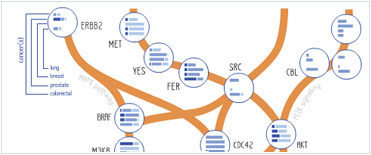








 Foundational characteristics of cancer include proliferation, angiogenesis, migration, evasion of apoptosis, and cellular immortality. Find key markers for these cellular processes and antibodies to detect them.
 The SUMOplot™ Analysis Program predicts and scores sumoylation sites in your protein. SUMOylation is a post-translational modification involved in various cellular processes, such as nuclear-cytosolic transport, transcriptional regulation, apoptosis, protein stability, response to stress, and progression through the cell cycle.
 The Autophagy Receptor Motif Plotter predicts and scores autophagy receptor binding sites in your protein. Identifying proteins connected to this pathway is critical to understanding the role of autophagy in physiological as well as pathological processes such as development, differentiation, neurodegenerative diseases, stress, infection, and cancer.
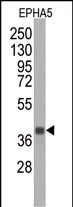
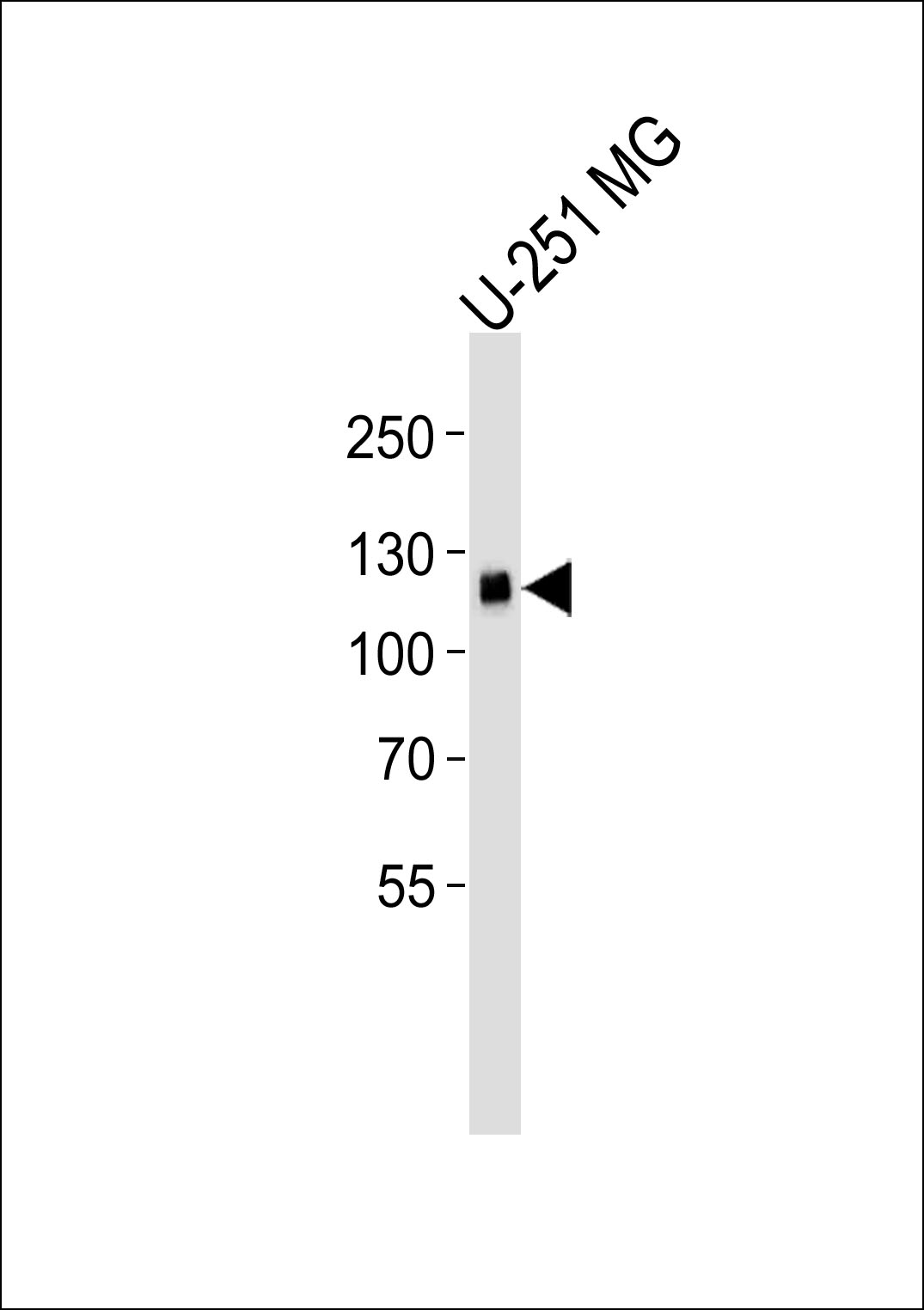
EPHA5 Antibody
Purified Mouse Monoclonal Antibody (Mab)


- SPECIFICATION
- CITATIONS: 1
- PROTOCOLS
- BACKGROUND

Application 
| WB, IHC-P, E |
|---|---|
| Primary Accession | P54756 |
| Reactivity | Human |
| Host | Mouse |
| Clonality | Monoclonal |
| Isotype | IgG1κ |
| Clone/Animal Names | 46CT61.6.4 |
| Calculated MW | 114803 Da |
| Gene ID | 2044 |
|---|---|
| Other Names | Ephrin type-A receptor 5, Brain-specific kinase, EPH homology kinase 1, EHK-1, EPH-like kinase 7, EK7, hEK7, EPHA5, BSK, EHK1, HEK7, TYRO4 |
| Target/Specificity | Purified His-tagged EPHA5 protein(Fragment) was used to produced this monoclonal antibody. |
| Dilution | WB~~1:1000 IHC-P~~1:10~50 |
| Format | Purified monoclonal antibody supplied in PBS with 0.09% (W/V) sodium azide. This antibody is purified through a protein G column, followed by dialysis against PBS. |
| Storage | Maintain refrigerated at 2-8°C for up to 2 weeks. For long term storage store at -20°C in small aliquots to prevent freeze-thaw cycles. |
| Precautions | EPHA5 Antibody is for research use only and not for use in diagnostic or therapeutic procedures. |
| Name | EPHA5 |
|---|---|
| Synonyms | BSK, EHK1, HEK7, TYRO4 |
| Function | Receptor tyrosine kinase which binds promiscuously GPI- anchored ephrin-A family ligands residing on adjacent cells, leading to contact-dependent bidirectional signaling into neighboring cells. The signaling pathway downstream of the receptor is referred to as forward signaling while the signaling pathway downstream of the ephrin ligand is referred to as reverse signaling. Among GPI-anchored ephrin-A ligands, EFNA5 most probably constitutes the cognate/functional ligand for EPHA5. Functions as an axon guidance molecule during development and may be involved in the development of the retinotectal, entorhino- hippocampal and hippocamposeptal pathways. Together with EFNA5 plays also a role in synaptic plasticity in adult brain through regulation of synaptogenesis. In addition to its function in the nervous system, the interaction of EPHA5 with EFNA5 mediates communication between pancreatic islet cells to regulate glucose-stimulated insulin secretion (By similarity). |
| Cellular Location | Cell membrane; Single-pass type I membrane protein. Cell projection, axon {ECO:0000250|UniProtKB:P54757}. Cell projection, dendrite |
| Tissue Location | Almost exclusively expressed in the nervous system in cortical neurons, cerebellar Purkinje cells and pyramidal neurons within the cortex and hippocampus. Display an increasing gradient of expression from the forebrain to hindbrain and spinal cord |

Provided below are standard protocols that you may find useful for product applications.
Background
This gene belongs to the ephrin receptor subfamily of the protein-tyrosine kinase family. EPH and EPH-related receptors have been implicated in mediating developmental events, particularly in the nervous system. Receptors in the EPH subfamily typically have a single kinase domain and an extracellular region containing a Cys-rich domain and 2 fibronectin type III repeats. The ephrin receptors are divided into 2 groups based on the similarity of their extracellular domain sequences and their affinities for binding ephrin-A and ephrin-B ligands. Two transcript variants encoding different isoforms have been found for this gene.
References
Personalized smoking cessation: interactions between nicotine dose, dependence and quit-success genotype score. Rose JE, et al. Mol Med, 2010 Jul-Aug. PMID 20379614.
Clinical significance of ephrin (eph)-A1, -A2, -a4, -a5 and -a7 receptors in pancreatic ductal adenocarcinoma. Giaginis C, et al. Pathol Oncol Res, 2010 Jun. PMID 19949912.
Frequent epigenetic inactivation of the receptor tyrosine kinase EphA5 by promoter methylation in human breast cancer. Fu DY, et al. Hum Pathol, 2010 Jan. PMID 19733895.
Over-expression of Eph and ephrin genes in advanced ovarian cancer: ephrin gene expression correlates with shortened survival. Herath NI, et al. BMC Cancer, 2006 Jun 1. PMID 16737551.
The LIFEdb database in 2006. Mehrle A, et al. Nucleic Acids Res, 2006 Jan 1. PMID 16381901.

If you have used an Abcepta product and would like to share how it has performed, please click on the "Submit Review" button and provide the requested information. Our staff will examine and post your review and contact you if needed.
If you have any additional inquiries please email technical services at tech@abcepta.com.

Ordering Information
Other Products
Shipping Information
