






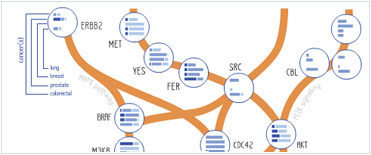






 Foundational characteristics of cancer include proliferation, angiogenesis, migration, evasion of apoptosis, and cellular immortality. Find key markers for these cellular processes and antibodies to detect them.
 The SUMOplot™ Analysis Program predicts and scores sumoylation sites in your protein. SUMOylation is a post-translational modification involved in various cellular processes, such as nuclear-cytosolic transport, transcriptional regulation, apoptosis, protein stability, response to stress, and progression through the cell cycle.
 The Autophagy Receptor Motif Plotter predicts and scores autophagy receptor binding sites in your protein. Identifying proteins connected to this pathway is critical to understanding the role of autophagy in physiological as well as pathological processes such as development, differentiation, neurodegenerative diseases, stress, infection, and cancer.
PIAS2 (PIASx1) Antibody (C-term)
Purified Rabbit Polyclonal Antibody (Pab)
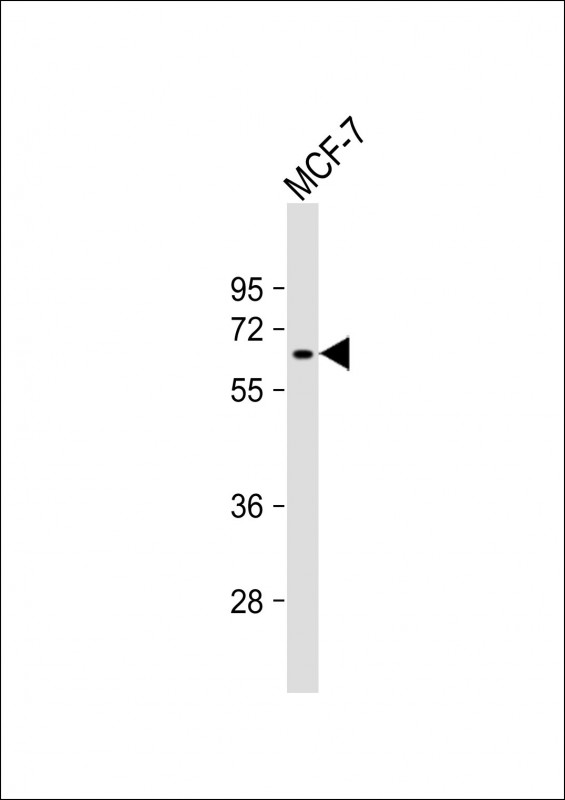
- SPECIFICATION
- CITATIONS: 1
- PROTOCOLS
- BACKGROUND

Application 
| IHC-P, WB, E |
|---|---|
| Primary Accession | O75928 |
| Reactivity | Human |
| Host | Rabbit |
| Clonality | Polyclonal |
| Isotype | Rabbit IgG |
| Calculated MW | 68240 Da |
| Antigen Region | 1-30 aa |
| Gene ID | 9063 |
|---|---|
| Other Names | E3 SUMO-protein ligase PIAS2, 632-, Androgen receptor-interacting protein 3, ARIP3, DAB2-interacting protein, DIP, Msx-interacting zinc finger protein, Miz1, PIAS-NY protein, Protein inhibitor of activated STAT x, Protein inhibitor of activated STAT2, PIAS2, PIASX |
| Target/Specificity | This PIAS2 (PIASx1) antibody is generated from rabbits immunized with a KLH conjugated synthetic peptide between 1-30 amino acids from the C-terminal region of human PIAS2 (PIASx1). |
| Dilution | WB~~1:1000 IHC-P~~1:50~100 |
| Format | Purified polyclonal antibody supplied in PBS with 0.09% (W/V) sodium azide. This antibody is prepared by Saturated Ammonium Sulfate (SAS) precipitation followed by dialysis against PBS. |
| Storage | Maintain refrigerated at 2-8°C for up to 2 weeks. For long term storage store at -20°C in small aliquots to prevent freeze-thaw cycles. |
| Precautions | PIAS2 (PIASx1) Antibody (C-term) is for research use only and not for use in diagnostic or therapeutic procedures. |
| Name | PIAS2 |
|---|---|
| Synonyms | PIASX |
| Function | Functions as an E3-type small ubiquitin-like modifier (SUMO) ligase, stabilizing the interaction between UBE2I and the substrate, and as a SUMO-tethering factor. Plays a crucial role as a transcriptional coregulator in various cellular pathways, including the STAT pathway, the p53 pathway and the steroid hormone signaling pathway. The effects of this transcriptional coregulation, transactivation or silencing may vary depending upon the biological context and the PIAS2 isoform studied. However, it seems to be mostly involved in gene silencing. Binds to sumoylated ELK1 and enhances its transcriptional activity by preventing recruitment of HDAC2 by ELK1, thus reversing SUMO-mediated repression of ELK1 transactivation activity. Isoform PIAS2-beta, but not isoform PIAS2-alpha, promotes MDM2 sumoylation. Isoform PIAS2-alpha promotes PARK7 sumoylation. Isoform PIAS2-beta promotes NCOA2 sumoylation more efficiently than isoform PIAS2-alpha. Isoform PIAS2-alpha sumoylates PML at'Lys-65' and 'Lys-160'. |
| Cellular Location | Nucleus speckle {ECO:0000250|UniProtKB:Q8C5D8}. Nucleus, PML body. Nucleus. Note=Colocalizes at least partially with promyelocytic leukemia nuclear bodies (PML NBs) (PubMed:22406621) Colocalizes with SUMO1 in nuclear granules (By similarity) {ECO:0000250|UniProtKB:Q8C5D8, ECO:0000269|PubMed:22406621} |
| Tissue Location | Mainly expressed in testis. Isoform 3 is expressed predominantly in adult testis, weakly in pancreas, embryonic testis and sperm, and at very low levels in other organs |

Provided below are standard protocols that you may find useful for product applications.
Background
PIASX functions as an E3-type small ubiquitin-like modifier (SUMO) ligase, stabilizing the interaction between UBE2I and the substrate, and as a SUMO-tethering factor. This protein plays a crucial role as a transcriptional coregulator in various cellular pathways, including the STAT pathway, the p53 pathway and the steroid hormone signaling pathway. The effects of this transcriptional coregulation, transactivation or silencing may vary depending upon the biological context and the PIAS2 isoform studied. However, it seems to be mostly involved in gene silencing. PIASX binds to sumoylated ELK1 and enhances its transcriptional activity by preventing recruitment of HDAC2 by ELK1, thus reversing SUMO-mediated repression of ELK1 transactivation activity. This antibody is directed against an epitope specific to PIAS2-alpha. Isoform PIAS2-beta, but not isoform PIAS2-alpha, promotes MDM2 sumoylation. Isoform PIAS2-alpha promotes PARK7 sumoylation. Isoform PIAS2-beta promotes NCOA2 sumoylation more efficiently than isoform PIAS2-alpha.
References
Arora, T., et al., J. Biol. Chem. 278(24):21327-21330 (2003).
Wu, S., et al., Oncogene 22(3):351-360 (2003).
Liu, B., et al., Proc. Natl. Acad. Sci. U.S.A. 95(18):10626-10631 (1998).
Wu, L., et al., Mech. Dev. 65 (1-2), 3-17 (1997).

If you have used an Abcepta product and would like to share how it has performed, please click on the "Submit Review" button and provide the requested information. Our staff will examine and post your review and contact you if needed.
If you have any additional inquiries please email technical services at tech@abcepta.com.


Ordering Information
Other Products
Shipping Information
