






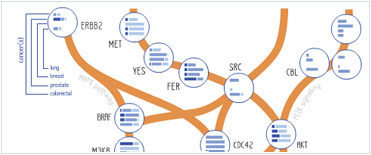






 Foundational characteristics of cancer include proliferation, angiogenesis, migration, evasion of apoptosis, and cellular immortality. Find key markers for these cellular processes and antibodies to detect them.
 The SUMOplot™ Analysis Program predicts and scores sumoylation sites in your protein. SUMOylation is a post-translational modification involved in various cellular processes, such as nuclear-cytosolic transport, transcriptional regulation, apoptosis, protein stability, response to stress, and progression through the cell cycle.
 The Autophagy Receptor Motif Plotter predicts and scores autophagy receptor binding sites in your protein. Identifying proteins connected to this pathway is critical to understanding the role of autophagy in physiological as well as pathological processes such as development, differentiation, neurodegenerative diseases, stress, infection, and cancer.
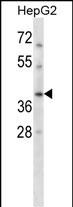
RAD51C Antibody (Center)
Affinity Purified Rabbit Polyclonal Antibody (Pab)
- SPECIFICATION
- CITATIONS
- PROTOCOLS
- BACKGROUND

Application 
| WB, E |
|---|---|
| Primary Accession | O43502 |
| Other Accession | NP_478123.1, NP_002867.1 |
| Reactivity | Human |
| Host | Rabbit |
| Clonality | Polyclonal |
| Isotype | Rabbit IgG |
| Calculated MW | 42190 Da |
| Antigen Region | 169-198 aa |
| Gene ID | 5889 |
|---|---|
| Other Names | DNA repair protein RAD51 homolog 3, R51H3, RAD51 homolog C, RAD51-like protein 2, RAD51C, RAD51L2 |
| Target/Specificity | This RAD51C antibody is generated from rabbits immunized with a KLH conjugated synthetic peptide between 169-198 amino acids from the Central region of human RAD51C. |
| Dilution | WB~~1:1000 |
| Format | Purified polyclonal antibody supplied in PBS with 0.09% (W/V) sodium azide. This antibody is purified through a protein A column, followed by peptide affinity purification. |
| Storage | Maintain refrigerated at 2-8°C for up to 2 weeks. For long term storage store at -20°C in small aliquots to prevent freeze-thaw cycles. |
| Precautions | RAD51C Antibody (Center) is for research use only and not for use in diagnostic or therapeutic procedures. |
| Name | RAD51C |
|---|---|
| Synonyms | RAD51L2 |
| Function | Essential for the homologous recombination (HR) pathway of DNA repair. Involved in the homologous recombination repair (HRR) pathway of double-stranded DNA breaks arising during DNA replication or induced by DNA-damaging agents. Part of the RAD51 paralog protein complexes BCDX2 and CX3 which act at different stages of the BRCA1- BRCA2-dependent HR pathway. Upon DNA damage, BCDX2 seems to act downstream of BRCA2 recruitment and upstream of RAD51 recruitment; CX3 seems to act downstream of RAD51 recruitment; both complexes bind predominantly to the intersection of the four duplex arms of the Holliday junction (HJ) and to junction of replication forks. The BCDX2 complex was originally reported to bind single-stranded DNA, single- stranded gaps in duplex DNA and specifically to nicks in duplex DNA. The BCDX2 subcomplex RAD51B:RAD51C exhibits single-stranded DNA- dependent ATPase activity suggesting an involvement in early stages of the HR pathway. Involved in RAD51 foci formation in response to DNA damage suggesting an involvement in early stages of HR probably in the invasion step. Has an early function in DNA repair in facilitating phosphorylation of the checkpoint kinase CHEK2 and thereby transduction of the damage signal, leading to cell cycle arrest and HR activation. Participates in branch migration and HJ resolution and thus is important for processing HR intermediates late in the DNA repair process; the function may be linked to the CX3 complex. Part of a PALB2-scaffolded HR complex containing BRCA2 and which is thought to play a role in DNA repair by HR. Protects RAD51 from ubiquitin-mediated degradation that is enhanced following DNA damage. Plays a role in regulating mitochondrial DNA copy number under conditions of oxidative stress in the presence of RAD51 and XRCC3. Contributes to DNA cross- link resistance, sister chromatid cohesion and genomic stability. Involved in maintaining centrosome number in mitosis. |
| Cellular Location | Nucleus. Cytoplasm Cytoplasm, perinuclear region Mitochondrion. Note=DNA damage induces an increase in nuclear levels. Accumulates in DNA damage induced nuclear foci or RAD51C foci which is formed during the S or G2 phase of cell cycle. Accumulation at DNA lesions requires the presence of NBN/NBS1, ATM and RPA |
| Tissue Location | Expressed in a variety of tissues, with highest expression in testis, heart muscle, spleen and prostate |

Thousands of laboratories across the world have published research that depended on the performance of antibodies from Abcepta to advance their research. Check out links to articles that cite our products in major peer-reviewed journals, organized by research category.
info@abcepta.com, and receive a free "I Love Antibodies" mug.

Provided below are standard protocols that you may find useful for product applications.
Background
This gene is a member of the RAD51 family of related genes, which encode strand-transfer proteins thought to be involved in recombinational repair of damaged DNA and in meiotic recombination. This gene product interacts with two other DNA repair proteins, encoded by RAD51B and XRCC3, but not with itself. The protein copurifies with XRCC3 protein in a complex, reflecting their endogenous association and suggesting a cooperative role during recombinational repair. This gene is one of four localized to a region of chromosome 17q23 where amplification occurs frequently in breast tumors. Overexpression of the four genes during amplification has been observed and suggests a possible role in tumor progression. Alternative splicing has been observed for this gene and two variants encoding different isoforms have been identified.
References
Zheng, Y., et al. Breast Cancer Res. Treat. (2010) In press :
Briggs, F.B., et al. Am. J. Epidemiol. 172(2):217-224(2010)
Monsees, G.M., et al. Breast Cancer Res. Treat. (2010) In press :
Meindl, A., et al. Nat. Genet. 42(5):410-414(2010)
Vaz, F., et al. Nat. Genet. 42(5):406-409(2010)

If you have used an Abcepta product and would like to share how it has performed, please click on the "Submit Review" button and provide the requested information. Our staff will examine and post your review and contact you if needed.
If you have any additional inquiries please email technical services at tech@abcepta.com.


Ordering Information
Other Products
Shipping Information
