






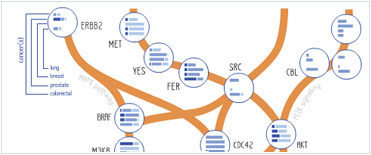








 Foundational characteristics of cancer include proliferation, angiogenesis, migration, evasion of apoptosis, and cellular immortality. Find key markers for these cellular processes and antibodies to detect them.
 The SUMOplot™ Analysis Program predicts and scores sumoylation sites in your protein. SUMOylation is a post-translational modification involved in various cellular processes, such as nuclear-cytosolic transport, transcriptional regulation, apoptosis, protein stability, response to stress, and progression through the cell cycle.
 The Autophagy Receptor Motif Plotter predicts and scores autophagy receptor binding sites in your protein. Identifying proteins connected to this pathway is critical to understanding the role of autophagy in physiological as well as pathological processes such as development, differentiation, neurodegenerative diseases, stress, infection, and cancer.
AKIRIN2 Antibody (C-term)
Affinity Purified Rabbit Polyclonal Antibody (Pab)
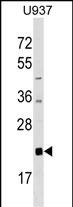
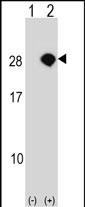
- SPECIFICATION
- CITATIONS
- PROTOCOLS
- BACKGROUND

Application 
| WB, E |
|---|---|
| Primary Accession | Q53H80 |
| Other Accession | Q25C79, B1AXD8, A8YXY8, NP_060534.1, A0A287BDC1 |
| Reactivity | Human |
| Predicted | Bovine, Mouse, Pig, Rat |
| Host | Rabbit |
| Clonality | Polyclonal |
| Isotype | Rabbit IgG |
| Calculated MW | 22496 Da |
| Antigen Region | 177-203 aa |
| Gene ID | 55122 |
|---|---|
| Other Names | Akirin-2, AKIRIN2, C6orf166 |
| Target/Specificity | This AKIRIN2 antibody is generated from rabbits immunized with a KLH conjugated synthetic peptide between 177-203 amino acids from the C-terminal region of human AKIRIN2. |
| Dilution | WB~~1:1000 |
| Format | Purified polyclonal antibody supplied in PBS with 0.09% (W/V) sodium azide. This antibody is purified through a protein A column, followed by peptide affinity purification. |
| Storage | Maintain refrigerated at 2-8°C for up to 2 weeks. For long term storage store at -20°C in small aliquots to prevent freeze-thaw cycles. |
| Precautions | AKIRIN2 Antibody (C-term) is for research use only and not for use in diagnostic or therapeutic procedures. |
| Name | AKIRIN2 {ECO:0000303|PubMed:18066067, ECO:0000312|HGNC:HGNC:21407} |
|---|---|
| Function | Molecular adapter that acts as a bridge between a variety of multiprotein complexes, and which is involved in embryonic development, immunity, myogenesis and brain development (PubMed:34711951). Plays a key role in nuclear protein degradation by promoting import of proteasomes into the nucleus: directly binds to fully assembled 20S proteasomes at one end and to nuclear import receptor IPO9 at the other end, bridging them together and mediating the import of pre-assembled proteasome complexes through the nuclear pore (PubMed:34711951). Involved in innate immunity by regulating the production of interleukin-6 (IL6) downstream of Toll-like receptor (TLR): acts by bridging the NF-kappa-B inhibitor NFKBIZ and the SWI/SNF complex, leading to promote induction of IL6 (By similarity). Also involved in adaptive immunity by promoting B-cell activation (By similarity). Involved in brain development: required for the survival and proliferation of cerebral cortical progenitor cells (By similarity). Involved in myogenesis: required for skeletal muscle formation and skeletal development, possibly by regulating expression of muscle differentiation factors (By similarity). Also plays a role in facilitating interdigital tissue regression during limb development (By similarity). |
| Cellular Location | Nucleus. Cytoplasm {ECO:0000250|UniProtKB:B1AXD8} Membrane {ECO:0000250|UniProtKB:B1AXD8}. Note=Present mainly in the nuclear fraction, and at much lower level in the cytoplasmic and membrane fractions. {ECO:0000250|UniProtKB:B1AXD8} |
| Tissue Location | Widely expressed with the highest expression in peripheral blood leukocytes. |

Thousands of laboratories across the world have published research that depended on the performance of antibodies from Abcepta to advance their research. Check out links to articles that cite our products in major peer-reviewed journals, organized by research category.
info@abcepta.com, and receive a free "I Love Antibodies" mug.

Provided below are standard protocols that you may find useful for product applications.
Background
Required for the innate immune response. Downstream effector of the Toll-like receptor (TLR), TNF and IL-1 beta signaling pathways leading to the production of IL-6. Forms a complex with YWHAB that acts to repress transcription of DUSP1 (By similarity).
References
Komiya, Y., et al. J. Biol. Chem. 283(27):18753-18764(2008)
Goto, A., et al. Nat. Immunol. 9(1):97-104(2008)
Levy, D., et al. BMC Med. Genet. 8 SUPPL 1, S3 (2007) :
Vasan, R.S., et al. BMC Med. Genet. 8 SUPPL 1, S2 (2007) :
Olsen, J.V., et al. Cell 127(3):635-648(2006)

If you have used an Abcepta product and would like to share how it has performed, please click on the "Submit Review" button and provide the requested information. Our staff will examine and post your review and contact you if needed.
If you have any additional inquiries please email technical services at tech@abcepta.com.


Ordering Information
Other Products
Shipping Information
