






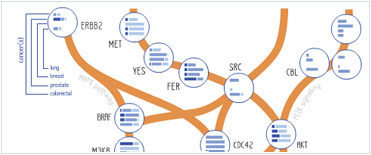








 Foundational characteristics of cancer include proliferation, angiogenesis, migration, evasion of apoptosis, and cellular immortality. Find key markers for these cellular processes and antibodies to detect them.
 The SUMOplot™ Analysis Program predicts and scores sumoylation sites in your protein. SUMOylation is a post-translational modification involved in various cellular processes, such as nuclear-cytosolic transport, transcriptional regulation, apoptosis, protein stability, response to stress, and progression through the cell cycle.
 The Autophagy Receptor Motif Plotter predicts and scores autophagy receptor binding sites in your protein. Identifying proteins connected to this pathway is critical to understanding the role of autophagy in physiological as well as pathological processes such as development, differentiation, neurodegenerative diseases, stress, infection, and cancer.
Bax Antibody (Center)
Affinity Purified Rabbit Polyclonal Antibody (Pab)
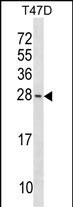
- SPECIFICATION
- CITATIONS: 1
- PROTOCOLS
- BACKGROUND

Application 
| WB, E |
|---|---|
| Primary Accession | Q07812 |
| Other Accession | Q63690, Q07813, NP_004315.1 |
| Reactivity | Human |
| Predicted | Mouse, Rat |
| Host | Rabbit |
| Clonality | Polyclonal |
| Isotype | Rabbit IgG |
| Calculated MW | 21184 Da |
| Antigen Region | 69-98 aa |
| Gene ID | 581 |
|---|---|
| Other Names | Apoptosis regulator BAX, Bcl-2-like protein 4, Bcl2-L-4, BAX, BCL2L4 |
| Target/Specificity | This Bax antibody is generated from rabbits immunized with a KLH conjugated synthetic peptide between 69-98 amino acids from the Central region of human Bax. |
| Dilution | WB~~1:1000 |
| Format | Purified polyclonal antibody supplied in PBS with 0.09% (W/V) sodium azide. This antibody is purified through a protein A column, followed by peptide affinity purification. |
| Storage | Maintain refrigerated at 2-8°C for up to 2 weeks. For long term storage store at -20°C in small aliquots to prevent freeze-thaw cycles. |
| Precautions | Bax Antibody (Center) is for research use only and not for use in diagnostic or therapeutic procedures. |
| Name | BAX |
|---|---|
| Synonyms | BCL2L4 |
| Function | Plays a role in the mitochondrial apoptotic process (PubMed:10772918, PubMed:16113678, PubMed:18948948, PubMed:21199865, PubMed:21458670, PubMed:25609812, PubMed:8358790, PubMed:8521816, PubMed:11060313, PubMed:16199525, PubMed:36361894). Under normal conditions, BAX is largely cytosolic via constant retrotranslocation from mitochondria to the cytosol mediated by BCL2L1/Bcl-xL, which avoids accumulation of toxic BAX levels at the mitochondrial outer membrane (MOM) (PubMed:21458670). Under stress conditions, undergoes a conformation change that causes translocation to the mitochondrion membrane, leading to the release of cytochrome c that then triggers apoptosis (PubMed:11060313, PubMed:16199525, PubMed:10772918, PubMed:16113678, PubMed:18948948, PubMed:21199865, PubMed:21458670, PubMed:25609812, PubMed:8358790, PubMed:8521816). Promotes activation of CASP3, and thereby apoptosis (PubMed:11060313, PubMed:16199525, PubMed:10772918, PubMed:16113678, PubMed:18948948, PubMed:21199865, PubMed:21458670, PubMed:25609812, PubMed:8358790, PubMed:8521816). |
| Cellular Location | [Isoform Alpha]: Mitochondrion outer membrane; Single-pass membrane protein. Cytoplasm. Nucleus Note=Colocalizes with 14-3-3 proteins in the cytoplasm. Under stress conditions, undergoes a conformation change that causes release from JNK-phosphorylated 14-3-3 proteins and translocation to the mitochondrion membrane. Upon Sendai virus infection, recruited to the mitochondrion through interaction with IRF3 (PubMed:25609812) [Isoform Gamma]: Cytoplasm. |
| Tissue Location | Expressed in a wide variety of tissues. Isoform Psi is found in glial tumors. Isoform Alpha is expressed in spleen, breast, ovary, testis, colon and brain, and at low levels in skin and lung Isoform Sigma is expressed in spleen, breast, ovary, testis, lung, colon, brain and at low levels in skin. Isoform Alpha and isoform Sigma are expressed in pro-myelocytic leukemia, histiocytic lymphoma, Burkitt's lymphoma, T-cell lymphoma, lymphoblastic leukemia, breast adenocarcinoma, ovary adenocarcinoma, prostate carcinoma, prostate adenocarcinoma, lung carcinoma, epidermoid carcinoma, small cell lung carcinoma and colon adenocarcinoma cell lines |

Provided below are standard protocols that you may find useful for product applications.
Background
The protein encoded by this gene belongs to the BCL2 protein family. BCL2 family members form hetero- or homodimers and act as anti- or pro-apoptotic regulators that are involved in a wide variety of cellular activities. This protein forms a heterodimer with BCL2, and functions as an apoptotic activator. This protein is reported to interact with, and increase the opening of, the mitochondrial voltage-dependent anion channel (VDAC), which leads to the loss in membrane potential and the release of cytochrome c. The expression of this gene is regulated by the tumor suppressor P53 and has been shown to be involved in P53-mediated apoptosis. Multiple alternatively spliced transcript variants, which encode different isoforms, have been reported for this gene.
References
Bailey, S.D., et al. Diabetes Care 33(10):2250-2253(2010)
Montessuit, S., et al. Cell 142(6):889-901(2010)
Ding, J., et al. J. Biol. Chem. 285(37):28749-28763(2010)
Ho-Pun-Cheung, A., et al. Pharmacogenomics J. (2010) In press :
Yu, D.K., et al. Zhonghua Zhong Liu Za Zhi 32(5):324-327(2010)

If you have used an Abcepta product and would like to share how it has performed, please click on the "Submit Review" button and provide the requested information. Our staff will examine and post your review and contact you if needed.
If you have any additional inquiries please email technical services at tech@abcepta.com.


Ordering Information
Other Products
Shipping Information
