






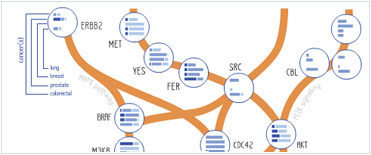








 Foundational characteristics of cancer include proliferation, angiogenesis, migration, evasion of apoptosis, and cellular immortality. Find key markers for these cellular processes and antibodies to detect them.
 The SUMOplot™ Analysis Program predicts and scores sumoylation sites in your protein. SUMOylation is a post-translational modification involved in various cellular processes, such as nuclear-cytosolic transport, transcriptional regulation, apoptosis, protein stability, response to stress, and progression through the cell cycle.
 The Autophagy Receptor Motif Plotter predicts and scores autophagy receptor binding sites in your protein. Identifying proteins connected to this pathway is critical to understanding the role of autophagy in physiological as well as pathological processes such as development, differentiation, neurodegenerative diseases, stress, infection, and cancer.
AKR1B1 Antibody (C-term)
Purified Rabbit Polyclonal Antibody (Pab)


- SPECIFICATION
- CITATIONS: 2
- PROTOCOLS
- BACKGROUND

Application 
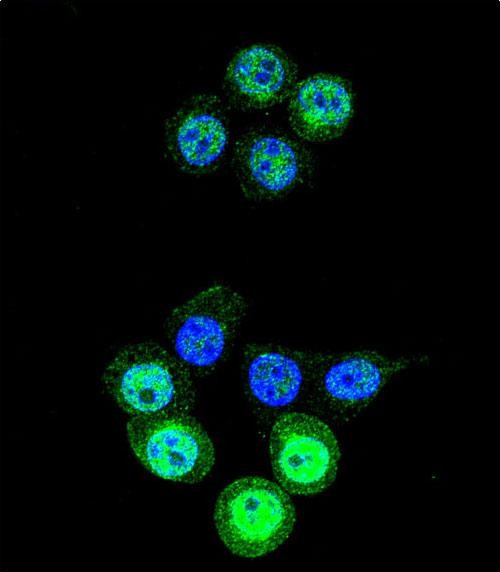
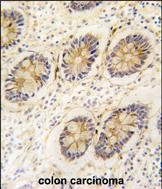
| WB, IF, IHC-P, E |
|---|---|
| Primary Accession | P15121 |
| Reactivity | Human |
| Host | Rabbit |
| Clonality | Polyclonal |
| Isotype | Rabbit IgG |
| Calculated MW | 35853 Da |
| Antigen Region | 290-316 aa |
| Gene ID | 231 |
|---|---|
| Other Names | Aldose reductase, AR, Aldehyde reductase, Aldo-keto reductase family 1 member B1, AKR1B1, ALDR1 |
| Target/Specificity | This AKR1B1 antibody is generated from rabbits immunized with a KLH conjugated synthetic peptide between 290-316 amino acids from the C-terminal region of human AKR1B1. |
| Dilution | IF~~1:10~50 WB~~1:1000 IHC-P~~1:10~50 |
| Format | Purified polyclonal antibody supplied in PBS with 0.09% (W/V) sodium azide. This antibody is prepared by Saturated Ammonium Sulfate (SAS) precipitation followed by dialysis against PBS. |
| Storage | Maintain refrigerated at 2-8°C for up to 2 weeks. For long term storage store at -20°C in small aliquots to prevent freeze-thaw cycles. |
| Precautions | AKR1B1 Antibody (C-term) is for research use only and not for use in diagnostic or therapeutic procedures. |
| Name | AKR1B1 |
|---|---|
| Synonyms | ALDR1, ALR2 {ECO:0000303|PubMed:17368668 |
| Function | Catalyzes the NADPH-dependent reduction of a wide variety of carbonyl-containing compounds to their corresponding alcohols. Displays enzymatic activity towards endogenous metabolites such as aromatic and aliphatic aldehydes, ketones, monosacharides, bile acids and xenobiotics substrates. Key enzyme in the polyol pathway, catalyzes reduction of glucose to sorbitol during hyperglycemia (PubMed:1936586). Reduces steroids and their derivatives and prostaglandins. Displays low enzymatic activity toward all-trans-retinal, 9-cis-retinal, and 13-cis- retinal (PubMed:12732097, PubMed:19010934, PubMed:8343525). Catalyzes the reduction of diverse phospholipid aldehydes such as 1-palmitoyl-2- (5-oxovaleroyl)-sn -glycero-3-phosphoethanolamin (POVPC) and related phospholipid aldehydes that are generated from the oxydation of phosphotidylcholine and phosphatdyleethanolamides (PubMed:17381426). Plays a role in detoxifying dietary and lipid-derived unsaturated carbonyls, such as crotonaldehyde, 4-hydroxynonenal, trans-2-hexenal, trans-2,4-hexadienal and their glutathione-conjugates carbonyls (GS- carbonyls) (PubMed:21329684). |
| Cellular Location | Cytoplasm. |
| Tissue Location | Highly expressed in embryonic epithelial cells (EUE) in response to osmotic stress. |

Provided below are standard protocols that you may find useful for product applications.
Background
AKR1B1 is a member of the aldo/keto reductase superfamily, which consists of more than 40 known enzymes and proteins. This protein catalyzes the reduction of a number of aldehydes, including the aldehyde form of glucose, and is thereby implicated in the development of diabetic complications by catalyzing the reduction of glucose to sorbitol.
References
Steuber,H.,J. Mol. Biol. 379 (5), 991-1016 (2008)
Gleissner,C.A.,Arterioscler. Thromb. Vasc. Biol. 28 (6), 1137-1143 (2008)
Grundmann,U.,DNA Cell Biol. 9 (3), 149-157 (1990)

If you have used an Abcepta product and would like to share how it has performed, please click on the "Submit Review" button and provide the requested information. Our staff will examine and post your review and contact you if needed.
If you have any additional inquiries please email technical services at tech@abcepta.com.

Ordering Information
Other Products
Shipping Information
