






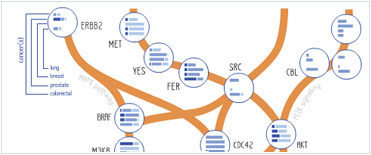








 Foundational characteristics of cancer include proliferation, angiogenesis, migration, evasion of apoptosis, and cellular immortality. Find key markers for these cellular processes and antibodies to detect them.
 The SUMOplot™ Analysis Program predicts and scores sumoylation sites in your protein. SUMOylation is a post-translational modification involved in various cellular processes, such as nuclear-cytosolic transport, transcriptional regulation, apoptosis, protein stability, response to stress, and progression through the cell cycle.
 The Autophagy Receptor Motif Plotter predicts and scores autophagy receptor binding sites in your protein. Identifying proteins connected to this pathway is critical to understanding the role of autophagy in physiological as well as pathological processes such as development, differentiation, neurodegenerative diseases, stress, infection, and cancer.
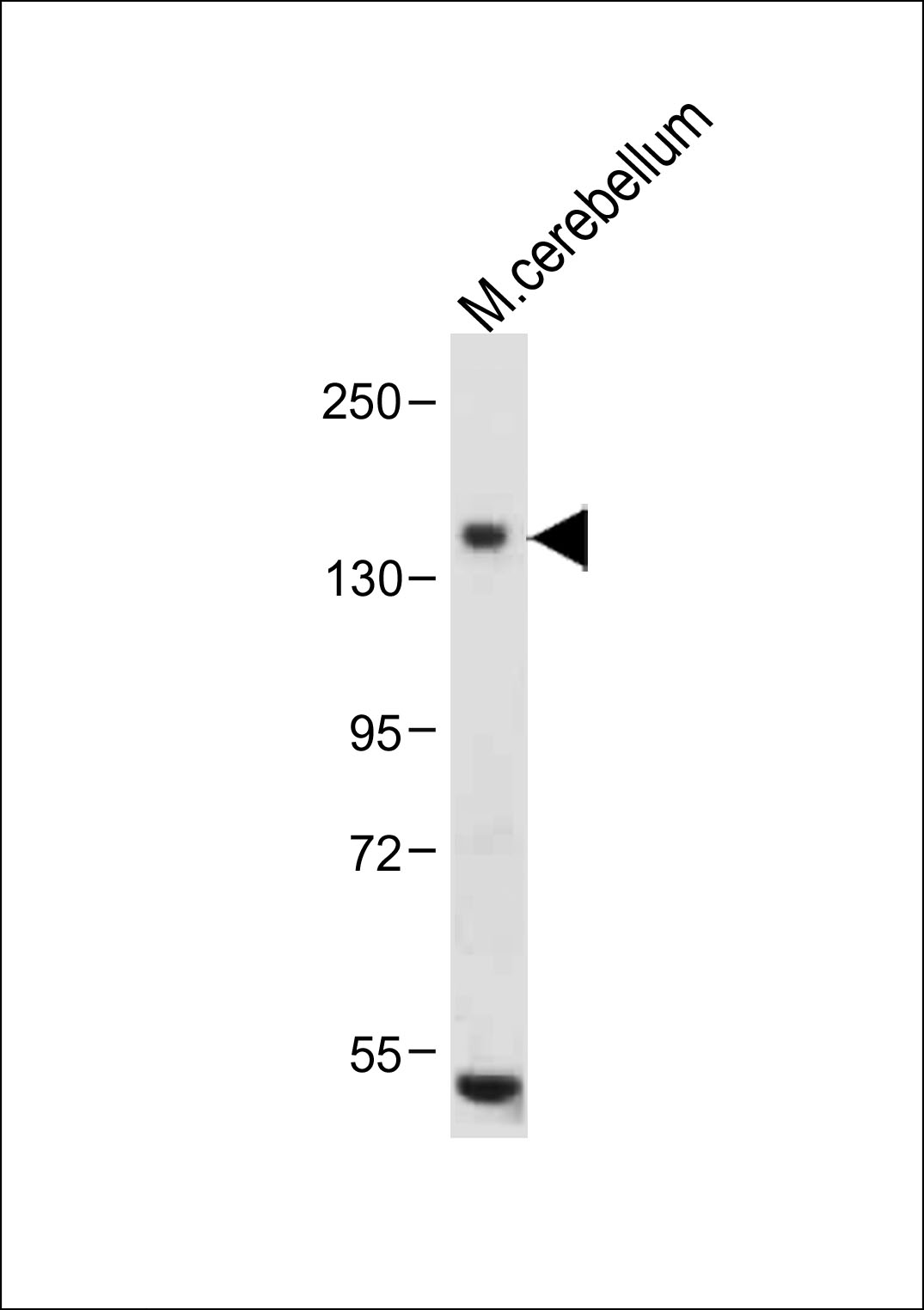
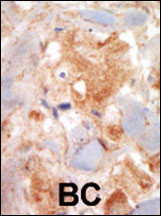
c-KIT Antibody (N-term)
Purified Rabbit Polyclonal Antibody (Pab)

- SPECIFICATION
- CITATIONS: 1
- PROTOCOLS
- BACKGROUND

Application 
| WB, E |
|---|---|
| Primary Accession | P10721 |
| Other Accession | Q99662 |
| Reactivity | Human, Monkey |
| Host | Rabbit |
| Clonality | Polyclonal |
| Isotype | Rabbit IgG |
| Calculated MW | 109865 Da |
| Antigen Region | 9-40 aa |
| Gene ID | 3815 |
|---|---|
| Other Names | Mast/stem cell growth factor receptor Kit, SCFR, Piebald trait protein, PBT, Proto-oncogene c-Kit, Tyrosine-protein kinase Kit, p145 c-kit, v-kit Hardy-Zuckerman 4 feline sarcoma viral oncogene homolog, CD117, KIT, SCFR |
| Target/Specificity | This c-KIT antibody is generated from rabbits immunized with a KLH conjugated synthetic peptide between 9-40 amino acids from the N-terminal region of human c-KIT. |
| Dilution | WB~~1:1000 FC~~1:10~50 IHC-P~~1:10~50 |
| Format | Purified polyclonal antibody supplied in PBS with 0.09% (W/V) sodium azide. This antibody is prepared by Saturated Ammonium Sulfate (SAS) precipitation followed by dialysis against PBS. |
| Storage | Maintain refrigerated at 2-8°C for up to 2 weeks. For long term storage store at -20°C in small aliquots to prevent freeze-thaw cycles. |
| Precautions | c-KIT Antibody (N-term) is for research use only and not for use in diagnostic or therapeutic procedures. |
| Name | KIT |
|---|---|
| Synonyms | SCFR |
| Function | Tyrosine-protein kinase that acts as a cell-surface receptor for the cytokine KITLG/SCF and plays an essential role in the regulation of cell survival and proliferation, hematopoiesis, stem cell maintenance, gametogenesis, mast cell development, migration and function, and in melanogenesis. In response to KITLG/SCF binding, KIT can activate several signaling pathways. Phosphorylates PIK3R1, PLCG1, SH2B2/APS and CBL. Activates the AKT1 signaling pathway by phosphorylation of PIK3R1, the regulatory subunit of phosphatidylinositol 3-kinase. Activated KIT also transmits signals via GRB2 and activation of RAS, RAF1 and the MAP kinases MAPK1/ERK2 and/or MAPK3/ERK1. Promotes activation of STAT family members STAT1, STAT3, STAT5A and STAT5B. Activation of PLCG1 leads to the production of the cellular signaling molecules diacylglycerol and inositol 1,4,5- trisphosphate. KIT signaling is modulated by protein phosphatases, and by rapid internalization and degradation of the receptor. Activated KIT promotes phosphorylation of the protein phosphatases PTPN6/SHP-1 and PTPRU, and of the transcription factors STAT1, STAT3, STAT5A and STAT5B. Promotes phosphorylation of PIK3R1, CBL, CRK (isoform Crk-II), LYN, MAPK1/ERK2 and/or MAPK3/ERK1, PLCG1, SRC and SHC1. |
| Cellular Location | [Isoform 1]: Cell membrane; Single-pass type I membrane protein [Isoform 3]: Cytoplasm. Note=Detected in the cytoplasm of spermatozoa, especially in the equatorial and subacrosomal region of the sperm head. |
| Tissue Location | [Isoform 3]: In testis, detected in spermatogonia in the basal layer and in interstitial Leydig cells but not in Sertoli cells or spermatocytes inside the seminiferous tubules (at protein level) (PubMed:20601678). Expression is maintained in ejaculated spermatozoa (at protein level) (PubMed:20601678) |

Provided below are standard protocols that you may find useful for product applications.
Background
KIT encodes the human homolog of the proto-oncogene c-kit. C-kit was first identified as the cellular homolog of the feline sarcoma viral oncogene v-kit. KIT is a type 3 transmembrane receptor for MGF (mast cell growth factor, also known as stem cell factor). Mutations in KIT are associated with gastrointestinal stromal tumors, mast cell disease, acute myelogenous lukemia, and piebaldism.
References
Wardelmann, E., et al., Int. J. Cancer 106(6):887-895 (2003). Lennartsson, J., et al., Exp. Cell Res. 288(1):110-118 (2003). Sakuma, Y., et al., Cancer Sci 94(6):486-491 (2003). Araki, K., et al., Lung Cancer 40(2):173-180 (2003). Voytyuk, O., et al., J. Biol. Chem. 278(11):9159-9166 (2003).

If you have used an Abcepta product and would like to share how it has performed, please click on the "Submit Review" button and provide the requested information. Our staff will examine and post your review and contact you if needed.
If you have any additional inquiries please email technical services at tech@abcepta.com.

Ordering Information
Other Products
Shipping Information
