






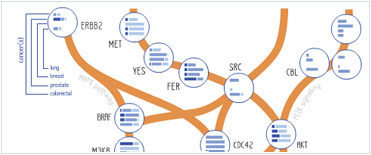








 Foundational characteristics of cancer include proliferation, angiogenesis, migration, evasion of apoptosis, and cellular immortality. Find key markers for these cellular processes and antibodies to detect them.
 The SUMOplot™ Analysis Program predicts and scores sumoylation sites in your protein. SUMOylation is a post-translational modification involved in various cellular processes, such as nuclear-cytosolic transport, transcriptional regulation, apoptosis, protein stability, response to stress, and progression through the cell cycle.
 The Autophagy Receptor Motif Plotter predicts and scores autophagy receptor binding sites in your protein. Identifying proteins connected to this pathway is critical to understanding the role of autophagy in physiological as well as pathological processes such as development, differentiation, neurodegenerative diseases, stress, infection, and cancer.
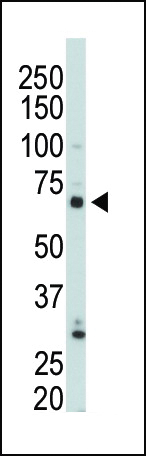
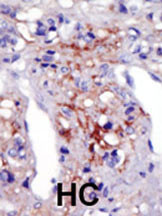
PIP5KI gamma (PIP5K1G) Antibody (N-term)
Purified Rabbit Polyclonal Antibody (Pab)
- SPECIFICATION
- CITATIONS: 1
- PROTOCOLS
- BACKGROUND

Application 
| IHC-P, WB, E |
|---|---|
| Primary Accession | O60331 |
| Reactivity | Human |
| Host | Rabbit |
| Clonality | Polyclonal |
| Isotype | Rabbit IgG |
| Calculated MW | 73260 Da |
| Antigen Region | 26-57 aa |
| Gene ID | 23396 |
|---|---|
| Other Names | Phosphatidylinositol 4-phosphate 5-kinase type-1 gamma, PIP5K1-gamma, PtdIns(4)P-5-kinase 1 gamma, Phosphatidylinositol 4-phosphate 5-kinase type I gamma, PIP5KIgamma, PIP5K1C, KIAA0589 |
| Target/Specificity | This PIP5KI gamma (PIP5K1G) antibody is generated from rabbits immunized with a KLH conjugated synthetic peptide between 26-57 amino acids from the N-terminal region of human PIP5KI gamma (PIP5K1G). |
| Dilution | WB~~1:1000 IHC-P~~1:50~100 |
| Format | Purified polyclonal antibody supplied in PBS with 0.09% (W/V) sodium azide. This antibody is prepared by Saturated Ammonium Sulfate (SAS) precipitation followed by dialysis against PBS. |
| Storage | Maintain refrigerated at 2-8°C for up to 2 weeks. For long term storage store at -20°C in small aliquots to prevent freeze-thaw cycles. |
| Precautions | PIP5KI gamma (PIP5K1G) Antibody (N-term) is for research use only and not for use in diagnostic or therapeutic procedures. |
| Name | PIP5K1C (HGNC:8996) |
|---|---|
| Synonyms | KIAA0589 |
| Function | Catalyzes the phosphorylation of phosphatidylinositol 4- phosphate (PtdIns(4)P/PI4P) to form phosphatidylinositol 4,5- bisphosphate (PtdIns(4,5)P2/PIP2), a lipid second messenger that regulates several cellular processes such as signal transduction, vesicle trafficking, actin cytoskeleton dynamics, cell adhesion, and cell motility (PubMed:12422219, PubMed:22942276). PtdIns(4,5)P2 can directly act as a second messenger or can be utilized as a precursor to generate other second messengers: inositol 1,4,5-trisphosphate (IP3), diacylglycerol (DAG) or phosphatidylinositol-3,4,5-trisphosphate (PtdIns(3,4,5)P3/PIP3) (Probable). PIP5K1A-mediated phosphorylation of PtdIns(4)P is the predominant pathway for PtdIns(4,5)P2 synthesis (By similarity). Together with PIP5K1A, is required for phagocytosis, both enzymes regulating different types of actin remodeling at sequential steps (By similarity). Promotes particle attachment by generating the pool of PtdIns(4,5)P2 that induces controlled actin depolymerization to facilitate Fc-gamma-R clustering. Mediates RAC1-dependent reorganization of actin filaments. Required for synaptic vesicle transport (By similarity). Controls the plasma membrane pool of PtdIns(4,5)P2 implicated in synaptic vesicle endocytosis and exocytosis (PubMed:12847086). Plays a role in endocytosis mediated by clathrin and AP-2 (adaptor protein complex 2) (PubMed:12847086). Required for clathrin-coated pits assembly at the synapse (PubMed:17261850). Participates in cell junction assembly (PubMed:17261850). Modulates adherens junctions formation by facilitating CDH1/cadherin trafficking (PubMed:17261850). Required for focal adhesion dynamics. Modulates the targeting of talins (TLN1 and TLN2) to the plasma membrane and their efficient assembly into focal adhesions (PubMed:12422219). Regulates the interaction between talins (TLN1 and TLN2) and beta-integrins (PubMed:12422219). Required for uropodium formation and retraction of the cell rear during directed migration (By similarity). Has a role in growth factor-stimulated directional cell migration and adhesion (By similarity). Required for talin assembly into nascent adhesions forming at the leading edge toward the direction of the growth factor (PubMed:17635937). Negative regulator of T-cell activation and adhesion (By similarity). Negatively regulates integrin alpha-L/beta-2 (LFA-1) polarization and adhesion induced by T-cell receptor (By similarity). Together with PIP5K1A has a role during embryogenesis and together with PIP5K1B may have a role immediately after birth (By similarity). |
| Cellular Location | Cell membrane; Peripheral membrane protein; Cytoplasmic side {ECO:0000250|UniProtKB:Q5I6B8}. Endomembrane system {ECO:0000250|UniProtKB:Q5I6B8}. Cytoplasm {ECO:0000250|UniProtKB:O70161}. Cell junction, focal adhesion. Cell junction, adherens junction. Cell projection, ruffle membrane {ECO:0000250|UniProtKB:Q5I6B8}. Cell projection, phagocytic cup {ECO:0000250|UniProtKB:O70161}. Cell projection, uropodium {ECO:0000250|UniProtKB:O70161}. Note=Detected in plasma membrane invaginations. Isoform 3 is detected in intracellular vesicle-like structures |
| Tissue Location | [Isoform 1]: Isoform 1 is strongly expressed in brain and also detected in heart and lung [Isoform 3]: Isoform 3 is detected in large amounts in heart and large intestine, is also present in lung, pancreas and thyroid, and to a lesser extent in brain, stomach and kidney |

Provided below are standard protocols that you may find useful for product applications.
Background
Protein kinases are enzymes that transfer a phosphate group from a phosphate donor, generally the g phosphate of ATP, onto an acceptor amino acid in a substrate protein. By this basic mechanism, protein kinases mediate most of the signal transduction in eukaryotic cells, regulating cellular metabolism, transcription, cell cycle progression, cytoskeletal rearrangement and cell movement, apoptosis, and differentiation. With more than 500 gene products, the protein kinase family is one of the largest families of proteins in eukaryotes. The family has been classified in 8 major groups based on sequence comparison of their tyrosine (PTK) or serine/threonine (STK) kinase catalytic domains.
References
Ling, K., et al., Nature 420(6911):89-93 (2002).
Di Paolo, G., et al., Nature 420(6911):85-89 (2002).
Ishihara, H., et al., J. Biol. Chem. 273(15):8741-8748 (1998).

If you have used an Abcepta product and would like to share how it has performed, please click on the "Submit Review" button and provide the requested information. Our staff will examine and post your review and contact you if needed.
If you have any additional inquiries please email technical services at tech@abcepta.com.

Ordering Information
Other Products
Shipping Information
