






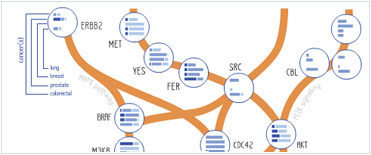








 Foundational characteristics of cancer include proliferation, angiogenesis, migration, evasion of apoptosis, and cellular immortality. Find key markers for these cellular processes and antibodies to detect them.
 The SUMOplot™ Analysis Program predicts and scores sumoylation sites in your protein. SUMOylation is a post-translational modification involved in various cellular processes, such as nuclear-cytosolic transport, transcriptional regulation, apoptosis, protein stability, response to stress, and progression through the cell cycle.
 The Autophagy Receptor Motif Plotter predicts and scores autophagy receptor binding sites in your protein. Identifying proteins connected to this pathway is critical to understanding the role of autophagy in physiological as well as pathological processes such as development, differentiation, neurodegenerative diseases, stress, infection, and cancer.
EIF5A Antibody (Center) Blocking Peptide
Synthetic peptide
- SPECIFICATION
- CITATIONS
- PROTOCOLS
- BACKGROUND
| Primary Accession | P63241 |
|---|---|
| Clone Names | 81202034 |
| Gene ID | 1984 |
|---|---|
| Other Names | Eukaryotic translation initiation factor 5A-1, eIF-5A-1, eIF-5A1, Eukaryotic initiation factor 5A isoform 1, eIF-5A, Rev-binding factor, eIF-4D, EIF5A |
| Target/Specificity | The synthetic peptide sequence used to generate the antibody AP2901c was selected from the Center region of human EIF5A. A 10 to 100 fold molar excess to antibody is recommended. Precise conditions should be optimized for a particular assay. |
| Format | Peptides are lyophilized in a solid powder format. Peptides can be reconstituted in solution using the appropriate buffer as needed. |
| Storage | Maintain refrigerated at 2-8°C for up to 6 months. For long term storage store at -20°C. |
| Precautions | This product is for research use only. Not for use in diagnostic or therapeutic procedures. |
| Name | EIF5A (HGNC:3300) |
|---|---|
| Function | Translation factor that promotes translation elongation and termination, particularly upon ribosome stalling at specific amino acid sequence contexts (PubMed:33547280). Binds between the exit (E) and peptidyl (P) site of the ribosome and promotes rescue of stalled ribosome: specifically required for efficient translation of polyproline-containing peptides as well as other motifs that stall the ribosome (By similarity). Acts as a ribosome quality control (RQC) cofactor by joining the RQC complex to facilitate peptidyl transfer during CAT tailing step (By similarity). Also involved in actin dynamics and cell cycle progression, mRNA decay and probably in a pathway involved in stress response and maintenance of cell wall integrity (PubMed:16987817). With syntenin SDCBP, functions as a regulator of p53/TP53 and p53/TP53-dependent apoptosis (PubMed:15371445). Regulates also TNF-alpha-mediated apoptosis (PubMed:15452064, PubMed:17187778). Mediates effects of polyamines on neuronal process extension and survival (PubMed:17360499). Is required for autophagy by assisting the ribosome in translating the ATG3 protein at a specific amino acid sequence, the 'ASP-ASP-Gly' motif, leading to the increase of the efficiency of ATG3 translation and facilitation of LC3B lipidation and autophagosome formation (PubMed:29712776). |
| Cellular Location | Cytoplasm. Nucleus. Endoplasmic reticulum membrane; Peripheral membrane protein; Cytoplasmic side. Note=Hypusine modification promotes the nuclear export and cytoplasmic localization and there was a dynamic shift in the localization from predominantly cytoplasmic to primarily nuclear under apoptotic inducing conditions (PubMed:19379712, PubMed:27306458). Nuclear export of hypusinated protein is mediated by XPO4 (PubMed:10944119, PubMed:27306458). |
| Tissue Location | Expressed in umbilical vein endothelial cells and several cancer cell lines (at protein level) |

Thousands of laboratories across the world have published research that depended on the performance of antibodies from Abcepta to advance their research. Check out links to articles that cite our products in major peer-reviewed journals, organized by research category.
info@abcepta.com, and receive a free "I Love Antibodies" mug.

Provided below are standard protocols that you may find useful for product applications.
Background
EIF5A precursor is the only cellular protein known to contain a specific lysine residue which is transformed into the unique amino acid hypusine [N-(4-amino-2-hydroxybutyl)-lysine] by a series of post translational reactions. eIF5A promotes the formation of the first peptide bond during the initial stage of protein synthesis.
References
Lee,S.B., et.al., Biochem. Biophys. Res. Commun. 383 (4), 497-502 (2009)Gosslau,A., et.al., J. Cell. Physiol. 219 (2), 485-493 (2009)

If you have used an Abcepta product and would like to share how it has performed, please click on the "Submit Review" button and provide the requested information. Our staff will examine and post your review and contact you if needed.
If you have any additional inquiries please email technical services at tech@abcepta.com.

Ordering Information
Other Products
Shipping Information
