






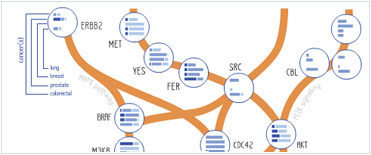








 Foundational characteristics of cancer include proliferation, angiogenesis, migration, evasion of apoptosis, and cellular immortality. Find key markers for these cellular processes and antibodies to detect them.
 The SUMOplot™ Analysis Program predicts and scores sumoylation sites in your protein. SUMOylation is a post-translational modification involved in various cellular processes, such as nuclear-cytosolic transport, transcriptional regulation, apoptosis, protein stability, response to stress, and progression through the cell cycle.
 The Autophagy Receptor Motif Plotter predicts and scores autophagy receptor binding sites in your protein. Identifying proteins connected to this pathway is critical to understanding the role of autophagy in physiological as well as pathological processes such as development, differentiation, neurodegenerative diseases, stress, infection, and cancer.
HSP27 (HSPB1) Antibody (S83) Blocking peptide
Synthetic peptide
- SPECIFICATION
- CITATIONS
- PROTOCOLS
- BACKGROUND
| Primary Accession | P04792 |
|---|---|
| Clone Names | 109075 |
| Gene ID | 3315 |
|---|---|
| Other Names | Heat shock protein beta-1, HspB1, 28 kDa heat shock protein, Estrogen-regulated 24 kDa protein, Heat shock 27 kDa protein, HSP 27, Stress-responsive protein 27, SRP27, HSPB1, HSP27, HSP28 |
| Target/Specificity | The synthetic peptide sequence used to generate the antibody AP7199a was selected from the S83 region of human HSPB1. A 10 to 100 fold molar excess to antibody is recommended. Precise conditions should be optimized for a particular assay. |
| Format | Peptides are lyophilized in a solid powder format. Peptides can be reconstituted in solution using the appropriate buffer as needed. |
| Storage | Maintain refrigerated at 2-8°C for up to 6 months. For long term storage store at -20°C. |
| Precautions | This product is for research use only. Not for use in diagnostic or therapeutic procedures. |
| Name | HSPB1 |
|---|---|
| Synonyms | HSP27, HSP28 |
| Function | Small heat shock protein which functions as a molecular chaperone probably maintaining denatured proteins in a folding- competent state (PubMed:10383393, PubMed:20178975). Plays a role in stress resistance and actin organization (PubMed:19166925). Through its molecular chaperone activity may regulate numerous biological processes including the phosphorylation and the axonal transport of neurofilament proteins (PubMed:23728742). |
| Cellular Location | Cytoplasm. Nucleus Cytoplasm, cytoskeleton, spindle Note=Cytoplasmic in interphase cells. Colocalizes with mitotic spindles in mitotic cells. Translocates to the nucleus during heat shock and resides in sub-nuclear structures known as SC35 speckles or nuclear splicing speckles. |
| Tissue Location | Detected in all tissues tested: skeletal muscle, heart, aorta, large intestine, small intestine, stomach, esophagus, bladder, adrenal gland, thyroid, pancreas, testis, adipose tissue, kidney, liver, spleen, cerebral cortex, blood serum and cerebrospinal fluid. Highest levels are found in the heart and in tissues composed of striated and smooth muscle. |

Thousands of laboratories across the world have published research that depended on the performance of antibodies from Abcepta to advance their research. Check out links to articles that cite our products in major peer-reviewed journals, organized by research category.
info@abcepta.com, and receive a free "I Love Antibodies" mug.

Provided below are standard protocols that you may find useful for product applications.
Background
In response to adverse changes in their environment, cells from many organisms increase the expression of a class of proteins referred to as heat shock or stress proteins. HSBP1 exhibits rapid increased phosphorylation in response to various mitogens, tumor promoters (e.g. phorbol esters) and calcium ionophores, and high levels are associated with carcinoma of the breast and with endometrial adenocarcinomas. Heat shock of HeLa cell cultures, or treatment with arsenite, phorbol ester, or tumor necrosis factor, causes a rapid phosphorylation of preexisting HSBP1, with Ser82 as the major site and Ser78 the minor site of phosphorylation. HSBP1 may exert phosphorylation-activated functions linked with growth signaling pathways in unstressed cells. A homeostatic function at this level could protect cells from adverse effects of signal transduction systems which may be activated inappropriately during stress.
References
Wano, C., et al., Exp. Cell Res. 298(2):584-592 (2004).Evgrafov, O.V., et al., Nat. Genet. 36(6):602-606 (2004).Song, H., et al., Biochem. Biophys. Res. Commun. 314(1):143-150 (2004).Chauhan, D., et al., Blood 102(9):3379-3386 (2003).Van Why, S.K., et al., J. Am. Soc. Nephrol. 14(1):98-106 (2003).

If you have used an Abcepta product and would like to share how it has performed, please click on the "Submit Review" button and provide the requested information. Our staff will examine and post your review and contact you if needed.
If you have any additional inquiries please email technical services at tech@abcepta.com.

Ordering Information
Other Products
Shipping Information
