






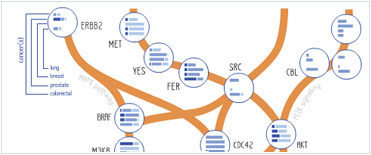








 Foundational characteristics of cancer include proliferation, angiogenesis, migration, evasion of apoptosis, and cellular immortality. Find key markers for these cellular processes and antibodies to detect them.
 The SUMOplot™ Analysis Program predicts and scores sumoylation sites in your protein. SUMOylation is a post-translational modification involved in various cellular processes, such as nuclear-cytosolic transport, transcriptional regulation, apoptosis, protein stability, response to stress, and progression through the cell cycle.
 The Autophagy Receptor Motif Plotter predicts and scores autophagy receptor binding sites in your protein. Identifying proteins connected to this pathway is critical to understanding the role of autophagy in physiological as well as pathological processes such as development, differentiation, neurodegenerative diseases, stress, infection, and cancer.
ATG4B Antibody
Mouse Monoclonal Antibody (Mab)
- SPECIFICATION
- CITATIONS
- PROTOCOLS
- BACKGROUND

Application 
| WB, E |
|---|---|
| Primary Accession | Q9Y4P1 |
| Other Accession | NP_037457.3 |
| Reactivity | Human |
| Host | Mouse |
| Clonality | Monoclonal |
| Isotype | IgM |
| Clone/Animal Names | 231CT21.1.7 |
| Calculated MW | 44294 Da |
| Gene ID | 23192 |
|---|---|
| Other Names | Cysteine protease ATG4B, 3422-, AUT-like 1 cysteine endopeptidase, Autophagin-1, Autophagy-related cysteine endopeptidase 1, Autophagy-related protein 4 homolog B, hAPG4B, ATG4B, APG4B, AUTL1, KIAA0943 |
| Target/Specificity | This ATG4B monoclonal antibody is generated from mouse immunized with ATG4B recombinant protein. |
| Dilution | WB~~1:500~1000 |
| Format | Purified monoclonal antibody supplied in PBS with 0.09% (W/V) sodium azide. This antibody is prepared by Euglobin precipitation followed by dialysis against PBS. |
| Storage | Maintain refrigerated at 2-8°C for up to 2 weeks. For long term storage store at -20°C in small aliquots to prevent freeze-thaw cycles. |
| Precautions | ATG4B Antibody is for research use only and not for use in diagnostic or therapeutic procedures. |
| Name | ATG4B {ECO:0000303|PubMed:15187094, ECO:0000312|HGNC:HGNC:20790} |
|---|---|
| Function | Cysteine protease that plays a key role in autophagy by mediating both proteolytic activation and delipidation of ATG8 family proteins (PubMed:15169837, PubMed:15187094, PubMed:17347651, PubMed:19322194, PubMed:21177865, PubMed:26378241, PubMed:29232556, PubMed:28821708, PubMed:30443548, PubMed:30661429, PubMed:22302004, PubMed:27527864, PubMed:28633005, PubMed:30076329). Required for canonical autophagy (macroautophagy), non-canonical autophagy as well as for mitophagy (PubMed:33773106, PubMed:33909989). The protease activity is required for proteolytic activation of ATG8 family proteins: cleaves the C-terminal amino acid of ATG8 proteins MAP1LC3A, MAP1LC3B, MAP1LC3C, GABARAPL1, GABARAPL2 and GABARAP, to reveal a C- terminal glycine (PubMed:15169837, PubMed:15187094, PubMed:17347651, PubMed:20818167, PubMed:19322194, PubMed:21177865, PubMed:22302004, PubMed:27527864, PubMed:28633005, PubMed:29458288, PubMed:30661429, PubMed:28287329). Exposure of the glycine at the C-terminus is essential for ATG8 proteins conjugation to phosphatidylethanolamine (PE) and insertion to membranes, which is necessary for autophagy (PubMed:15169837, PubMed:15187094, PubMed:17347651, PubMed:19322194, PubMed:21177865, PubMed:22302004). Protease activity is also required to counteract formation of high-molecular weight conjugates of ATG8 proteins (ATG8ylation): acts as a deubiquitinating-like enzyme that removes ATG8 conjugated to other proteins, such as ATG3 (PubMed:31315929, PubMed:33773106). In addition to the protease activity, also mediates delipidation of ATG8 family proteins (PubMed:15187094, PubMed:28633005, PubMed:29458288, PubMed:32686895, PubMed:33909989, PubMed:19322194). Catalyzes delipidation of PE- conjugated forms of ATG8 proteins during macroautophagy (PubMed:15187094, PubMed:29458288, PubMed:32686895, PubMed:33909989, PubMed:19322194). Also involved in non-canonical autophagy, a parallel pathway involving conjugation of ATG8 proteins to single membranes at endolysosomal compartments, by catalyzing delipidation of ATG8 proteins conjugated to phosphatidylserine (PS) (PubMed:33909989). Compared to other members of the family (ATG4A, ATG4C or ATG4C), constitutes the major protein for proteolytic activation of ATG8 proteins, while it displays weaker delipidation activity than other ATG4 paralogs (PubMed:29458288, PubMed:30661429). Involved in phagophore growth during mitophagy independently of its protease activity and of ATG8 proteins: acts by regulating ATG9A trafficking to mitochondria and promoting phagophore-endoplasmic reticulum contacts during the lipid transfer phase of mitophagy (PubMed:33773106). |
| Cellular Location | Cytoplasm. Cytoplasm, cytosol. Cytoplasmic vesicle, autophagosome. Endoplasmic reticulum. Mitochondrion. Note=Mainly localizes to the cytoplasm, including cytosol (PubMed:29165041). A samll potion localizes to mitochondria; phosphorylation at Ser-34 promotes localization to mitochondria (PubMed:29165041). |

Thousands of laboratories across the world have published research that depended on the performance of antibodies from Abcepta to advance their research. Check out links to articles that cite our products in major peer-reviewed journals, organized by research category.
info@abcepta.com, and receive a free "I Love Antibodies" mug.

Provided below are standard protocols that you may find useful for product applications.
Background
Autophagy is the process by which endogenous proteins and damaged organelles are destroyed intracellularly. Autophagy is postulated to be essential for cell homeostasis and cell remodeling during differentiation, metamorphosis, non-apoptotic cell death, and aging. Reduced levels of autophagy have been described in some malignant tumors, and a role for autophagy in controlling the unregulated cell growth linked to cancer has been proposed. This gene encodes a member of the autophagin protein family. The encoded protein is also designated as a member of the C-54 family of cysteine proteases.
References
?Satoo, K., et al. EMBO J. 28(9):1341-1350(2009) ?Sugiyama, N., et al. Mol. Cell Proteomics 6(6):1103-1109(2007) ?Ewing, R.M., et al. Mol. Syst. Biol. 3, 89 (2007) : ?Olsen, J.V., et al. Cell 127(3):635-648(2006) ?Olsen, J.V., et al. Cell 127(3):635-648(2006)

If you have used an Abcepta product and would like to share how it has performed, please click on the "Submit Review" button and provide the requested information. Our staff will examine and post your review and contact you if needed.
If you have any additional inquiries please email technical services at tech@abcepta.com.

Ordering Information
Other Products
Shipping Information
