






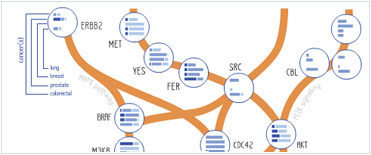








 Foundational characteristics of cancer include proliferation, angiogenesis, migration, evasion of apoptosis, and cellular immortality. Find key markers for these cellular processes and antibodies to detect them.
 The SUMOplot™ Analysis Program predicts and scores sumoylation sites in your protein. SUMOylation is a post-translational modification involved in various cellular processes, such as nuclear-cytosolic transport, transcriptional regulation, apoptosis, protein stability, response to stress, and progression through the cell cycle.
 The Autophagy Receptor Motif Plotter predicts and scores autophagy receptor binding sites in your protein. Identifying proteins connected to this pathway is critical to understanding the role of autophagy in physiological as well as pathological processes such as development, differentiation, neurodegenerative diseases, stress, infection, and cancer.
Pan SUMO Antibody
Purified Rabbit Polyclonal Antibody (Pab)


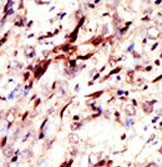
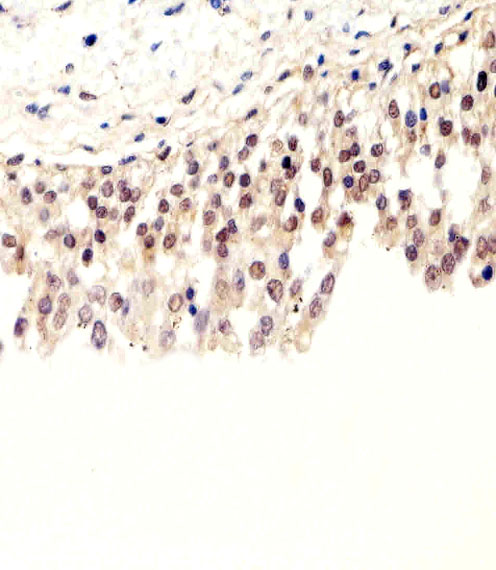
- SPECIFICATION
- CITATIONS: 4
- PROTOCOLS
- BACKGROUND

Application 
| IHC-P, WB, IF, E |
|---|---|
| Primary Accession | P55854 |
| Reactivity | Human, Rat |
| Host | Rabbit |
| Clonality | Polyclonal |
| Isotype | Rabbit IgG |
| Calculated MW | 11637 Da |
| Gene ID | 6612 |
|---|---|
| Other Names | Small ubiquitin-related modifier 3, SUMO-3, SMT3 homolog 1 {ECO:0000312|HGNC:HGNC:11124}, SUMO-2, Ubiquitin-like protein SMT3A, Smt3A, SUMO3 (HGNC:11124) |
| Target/Specificity | "This Pan SUMO antibody recognizes SUMO2 and SUMO3. This antibody is generated from rabbits immunized with a recombinant protein encoding full length human SUMO3." |
| Dilution | IF~~1:10~50 WB~~1:1000 IHC-P~~1:100 |
| Format | Purified polyclonal antibody supplied in PBS with 0.09% (W/V) sodium azide. This antibody is prepared by Saturated Ammonium Sulfate (SAS) precipitation followed by dialysis against PBS. |
| Storage | Maintain refrigerated at 2-8°C for up to 2 weeks. For long term storage store at -20°C in small aliquots to prevent freeze-thaw cycles. |
| Precautions | Pan SUMO Antibody is for research use only and not for use in diagnostic or therapeutic procedures. |
| Name | SUMO3 (HGNC:11124) |
|---|---|
| Function | Ubiquitin-like protein which can be covalently attached to target lysines either as a monomer or as a lysine-linked polymer. Does not seem to be involved in protein degradation and may function as an antagonist of ubiquitin in the degradation process. Plays a role in a number of cellular processes such as nuclear transport, DNA replication and repair, mitosis and signal transduction. Covalent attachment to its substrates requires prior activation by the E1 complex SAE1-SAE2 and linkage to the E2 enzyme UBE2I, and can be promoted by an E3 ligase such as PIAS1-4, RANBP2 or CBX4 (PubMed:11451954, PubMed:18538659, PubMed:21965678). Plays a role in the regulation of sumoylation status of SETX (PubMed:24105744). |
| Cellular Location | Cytoplasm. Nucleus. Nucleus, PML body |
| Tissue Location | Expressed predominantly in liver. |
Research Areas


Abcepta welcomes feedback from its customers.
If you have used an Abcepta product and would like to share how it has performed, please click on the "Submit Review" button and provide the requested information. Our staff will examine and post your review and contact you if needed.
If you have any additional inquiries please email technical services at tech@abcepta.com.

$ 385.00
Cat# AP1290a
Ordering Information
United States
AlbaniaAustraliaAustriaBelgiumBosnia & HerzegovinaBrazilBulgariaCanadaCentral AmericaChinaCroatiaCyprusCzech RepublicDenmarkEstoniaFinlandFranceGermanyGreeceHong KongHungaryIcelandIndiaIndonesiaIrelandIsraelItalyJapanLatviaLithuaniaLuxembourgMacedoniaMalaysiaMaltaNetherlandsNew ZealandNorwayPakistanPolandPortugalRomaniaSerbiaSingaporeSlovakiaSloveniaSouth AfricaSouth KoreaSpainSwedenSwitzerlandTaiwanTurkeyUnited KingdomUnited StatesVietnamWorldwideOthersMexico
USA Headquarters
(888) 735-7227 / (858) 622-0099 or (858) 875-1900
Other Products
Shipping Information
Domestic orders (in stock items)
Shipped out the same day. Orders placed after 1 PM (PST) will ship out the next business day.
International orders
Contact your local distributors
