






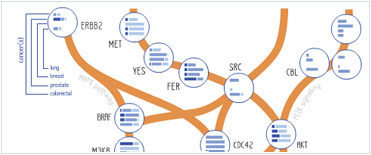








 Foundational characteristics of cancer include proliferation, angiogenesis, migration, evasion of apoptosis, and cellular immortality. Find key markers for these cellular processes and antibodies to detect them.
 The SUMOplot™ Analysis Program predicts and scores sumoylation sites in your protein. SUMOylation is a post-translational modification involved in various cellular processes, such as nuclear-cytosolic transport, transcriptional regulation, apoptosis, protein stability, response to stress, and progression through the cell cycle.
 The Autophagy Receptor Motif Plotter predicts and scores autophagy receptor binding sites in your protein. Identifying proteins connected to this pathway is critical to understanding the role of autophagy in physiological as well as pathological processes such as development, differentiation, neurodegenerative diseases, stress, infection, and cancer.
KAT2A Antibody (C-term)
Affinity Purified Rabbit Polyclonal Antibody (Pab)
- SPECIFICATION
- CITATIONS
- PROTOCOLS
- BACKGROUND

Application 
| WB, E |
|---|---|
| Primary Accession | Q92830 |
| Other Accession | Q9JHD2, NP_066564.2, A0A0R4IXF6 |
| Reactivity | Human |
| Predicted | Zebrafish, Mouse |
| Host | Rabbit |
| Clonality | Polyclonal |
| Isotype | Rabbit IgG |
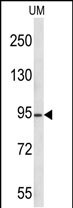
| Calculated MW | 93926 Da |
| Antigen Region | 611-638 aa |
| Gene ID | 2648 |
|---|---|
| Other Names | Histone acetyltransferase KAT2A, General control of amino acid synthesis protein 5-like 2, Histone acetyltransferase GCN5, HsGCN5, Lysine acetyltransferase 2A, STAF97, KAT2A, GCN5, GCN5L2, HGCN5 |
| Target/Specificity | This KAT2A antibody is generated from rabbits immunized with a KLH conjugated synthetic peptide between 611-638 amino acids from the C-terminal region of human KAT2A. |
| Dilution | WB~~1:1000 |
| Format | Purified polyclonal antibody supplied in PBS with 0.09% (W/V) sodium azide. This antibody is purified through a protein A column, followed by peptide affinity purification. |
| Storage | Maintain refrigerated at 2-8°C for up to 2 weeks. For long term storage store at -20°C in small aliquots to prevent freeze-thaw cycles. |
| Precautions | KAT2A Antibody (C-term) is for research use only and not for use in diagnostic or therapeutic procedures. |
| Name | KAT2A {ECO:0000303|PubMed:27796307, ECO:0000312|HGNC:HGNC:4201} |
|---|---|
| Function | Protein lysine acyltransferase that can act as a acetyltransferase, glutaryltransferase, succinyltransferase or malonyltransferase, depending on the context (PubMed:29211711, PubMed:35995428). Acts as a histone lysine succinyltransferase: catalyzes succinylation of histone H3 on 'Lys-79' (H3K79succ), with a maximum frequency around the transcription start sites of genes (PubMed:29211711). Succinylation of histones gives a specific tag for epigenetic transcription activation (PubMed:29211711). Association with the 2-oxoglutarate dehydrogenase complex, which provides succinyl-CoA, is required for histone succinylation (PubMed:29211711). In different complexes, functions either as an acetyltransferase (HAT) or as a succinyltransferase: in the SAGA and ATAC complexes, acts as a histone acetyltransferase (PubMed:17301242, PubMed:19103755, PubMed:29211711). Has significant histone acetyltransferase activity with core histones, but not with nucleosome core particles (PubMed:17301242, PubMed:19103755, PubMed:21131905). Has a a strong preference for acetylation of H3 at 'Lys-9' (H3K9ac) (PubMed:21131905). Acetylation of histones gives a specific tag for epigenetic transcription activation (PubMed:17301242, PubMed:19103755, PubMed:29211711). Recruited by the XPC complex at promoters, where it specifically mediates acetylation of histone variant H2A.Z.1/H2A.Z, thereby promoting expression of target genes (PubMed:29973595, PubMed:31527837). Involved in long-term memory consolidation and synaptic plasticity: acts by promoting expression of a hippocampal gene expression network linked to neuroactive receptor signaling (By similarity). Acts as a positive regulator of T-cell activation: upon TCR stimulation, recruited to the IL2 promoter following interaction with NFATC2 and catalyzes acetylation of histone H3 at 'Lys-9' (H3K9ac), leading to promote IL2 expression (By similarity). Required for growth and differentiation of craniofacial cartilage and bone by regulating acetylation of histone H3 at 'Lys-9' (H3K9ac) (By similarity). Regulates embryonic stem cell (ESC) pluripotency and differentiation (By similarity). Also acetylates non- histone proteins, such as CEBPB, PPARGC1A, PLK4 and TBX5 (PubMed:17301242, PubMed:16753578, PubMed:27796307, PubMed:29174768). Involved in heart and limb development by mediating acetylation of TBX5, acetylation regulating nucleocytoplasmic shuttling of TBX5 (PubMed:29174768). Acts as a negative regulator of centrosome amplification by mediating acetylation of PLK4 (PubMed:27796307). Acts as a negative regulator of gluconeogenesis by mediating acetylation and subsequent inactivation of PPARGC1A (PubMed:16753578, PubMed:23142079). Also acts as a histone glutaryltransferase: catalyzes glutarylation of histone H4 on 'Lys-91' (H4K91glu), a mark that destabilizes nucleosomes by promoting dissociation of the H2A-H2B dimers from nucleosomes (PubMed:31542297). |
| Cellular Location | Nucleus. Chromosome Cytoplasm, cytoskeleton, microtubule organizing center, centrosome. Note=Mainly localizes to the nucleus (PubMed:27796307). Localizes to sites of DNA damage (PubMed:25593309) Also localizes to centrosomes in late G1 and around the G1/S transition, coinciding with the onset of centriole formation (PubMed:27796307). |
| Tissue Location | Expressed in all tissues tested. |

Thousands of laboratories across the world have published research that depended on the performance of antibodies from Abcepta to advance their research. Check out links to articles that cite our products in major peer-reviewed journals, organized by research category.
info@abcepta.com, and receive a free "I Love Antibodies" mug.

Provided below are standard protocols that you may find useful for product applications.
Background
KAT2A, or GCN5, is a histone acetyltransferase (HAT) that functions primarily as a transcriptional activator. It also functions as a repressor of NF-kappa-B (see MIM 164011) by promoting ubiquitination of the NF-kappa-B subunit RELA (MIM 164014) in a HAT-independent manner (Mao et al., 2009 [PubMed 19339690]).
References
Terreni, M., et al. Retrovirology 7, 18 (2010) :
Atanassov, B.S., et al. Mol. Cell 35(3):352-364(2009)
Kelly, T.J., et al. J. Biol. Chem. 284(30):19945-19952(2009)
Mao, X., et al. Genes Dev. 23(7):849-861(2009)
Paolinelli, R., et al. Nat. Struct. Mol. Biol. 16(4):412-420(2009)

If you have used an Abcepta product and would like to share how it has performed, please click on the "Submit Review" button and provide the requested information. Our staff will examine and post your review and contact you if needed.
If you have any additional inquiries please email technical services at tech@abcepta.com.


Ordering Information
Other Products
Shipping Information
