














 Foundational characteristics of cancer include proliferation, angiogenesis, migration, evasion of apoptosis, and cellular immortality. Find key markers for these cellular processes and antibodies to detect them.
 The SUMOplot™ Analysis Program predicts and scores sumoylation sites in your protein. SUMOylation is a post-translational modification involved in various cellular processes, such as nuclear-cytosolic transport, transcriptional regulation, apoptosis, protein stability, response to stress, and progression through the cell cycle.
 The Autophagy Receptor Motif Plotter predicts and scores autophagy receptor binding sites in your protein. Identifying proteins connected to this pathway is critical to understanding the role of autophagy in physiological as well as pathological processes such as development, differentiation, neurodegenerative diseases, stress, infection, and cancer.
HSP40 Antibody
Purified Rabbit Polyclonal Antibody (Pab)
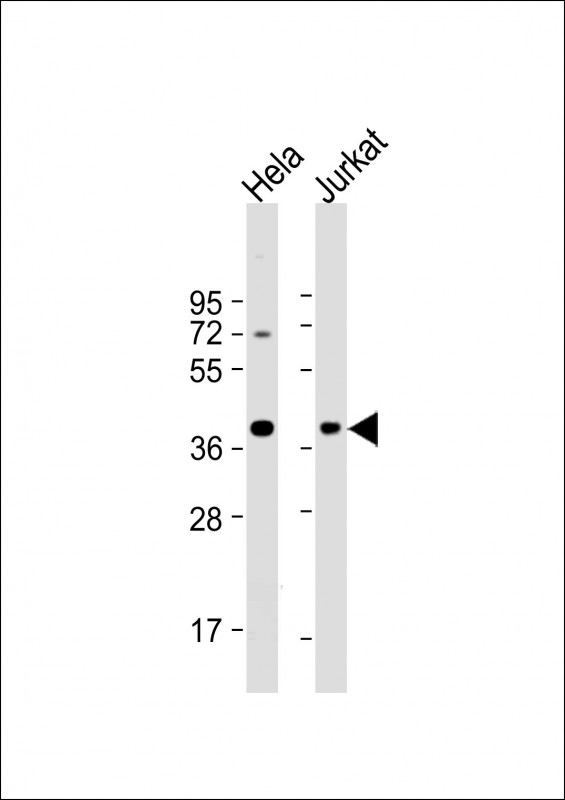
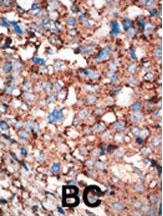
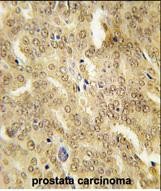
- SPECIFICATION
- CITATIONS
- PROTOCOLS
- BACKGROUND

Application 
| IHC-P, WB, E |
|---|---|
| Primary Accession | P25685 |
| Other Accession | NP_006136 |
| Reactivity | Human, Mouse |
| Host | Rabbit |
| Clonality | Polyclonal |
| Isotype | Rabbit IgG |
| Calculated MW | 38044 Da |
| Gene ID | 3337 |
|---|---|
| Other Names | DnaJ homolog subfamily B member 1, DnaJ protein homolog 1, Heat shock 40 kDa protein 1, HSP40, Heat shock protein 40, Human DnaJ protein 1, hDj-1, DNAJB1, DNAJ1, HDJ1, HSPF1 |
| Target/Specificity | This HSP40 antibody is generated from rabbits immunized with a recombinant protein encoding full length of human HSP40. |
| Dilution | WB~~1:4000 IHC-P~~1:50~100 |
| Format | Purified polyclonal antibody supplied in PBS with 0.09% (W/V) sodium azide. This antibody is prepared by Saturated Ammonium Sulfate (SAS) precipitation followed by dialysis against PBS. |
| Storage | Maintain refrigerated at 2-8°C for up to 2 weeks. For long term storage store at -20°C in small aliquots to prevent freeze-thaw cycles. |
| Precautions | HSP40 Antibody is for research use only and not for use in diagnostic or therapeutic procedures. |
| Name | DNAJB1 |
|---|---|
| Synonyms | DNAJ1, HDJ1, HSPF1 |
| Function | Interacts with HSP70 and can stimulate its ATPase activity. Stimulates the association between HSC70 and HIP. Negatively regulates heat shock-induced HSF1 transcriptional activity during the attenuation and recovery phase period of the heat shock response (PubMed:9499401). Stimulates ATP hydrolysis and the folding of unfolded proteins mediated by HSPA1A/B (in vitro) (PubMed:24318877). |
| Cellular Location | Cytoplasm. Nucleus. Nucleus, nucleolus. Note=Translocates rapidly from the cytoplasm to the nucleus, and especially to the nucleoli, upon heat shock |

Thousands of laboratories across the world have published research that depended on the performance of antibodies from Abcepta to advance their research. Check out links to articles that cite our products in major peer-reviewed journals, organized by research category.
info@abcepta.com, and receive a free "I Love Antibodies" mug.

Provided below are standard protocols that you may find useful for product applications.
Background
DnaJ (Hsp40) belongs to the DnaJ-class of molecular chaperones with a C-terminal Zn finger domain. HSP40 (DnaJ) together with DnaK and GrpE form a molecular chaperone that is involved in formation of protein complexes, protein folding, prevention of protein aggregation, and protein turnover and export. Several human neurodegenerative diseases involve the expansion of a polyglutamine within the disease proteins. Molecular chaperones such as HSP40 complexes can modulate polyglutamine pathogenesis In transgenic Drosophila disease models of Machado-Joseph disease and Huntington disease Hdj1, the Drosophila homolog to human HSP40, demonstrates substrate specificity for polyglutamine proteins suppression in combination with other molecular chapterones of neurotoxicity, and altered solubility of mutant polyglutamine proteins.
References
Ohtsuka, K., et al., Cell Stress Chaperones 5(2):98-112 (2000). Hata, M., et al., Biochim. Biophys. Acta 1397(1):43-55 (1998). Hata, M., et al., Genomics 38(3):446-449 (1996). Ohtsuka, K., Biochem. Biophys. Res. Commun. 197(1):235-240 (1993).

If you have used an Abcepta product and would like to share how it has performed, please click on the "Submit Review" button and provide the requested information. Our staff will examine and post your review and contact you if needed.
If you have any additional inquiries please email technical services at tech@abcepta.com.

Ordering Information
Other Products
Shipping Information
