






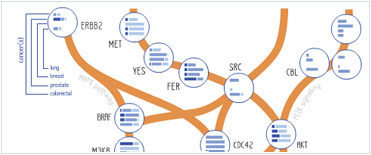








 Foundational characteristics of cancer include proliferation, angiogenesis, migration, evasion of apoptosis, and cellular immortality. Find key markers for these cellular processes and antibodies to detect them.
 The SUMOplot™ Analysis Program predicts and scores sumoylation sites in your protein. SUMOylation is a post-translational modification involved in various cellular processes, such as nuclear-cytosolic transport, transcriptional regulation, apoptosis, protein stability, response to stress, and progression through the cell cycle.
 The Autophagy Receptor Motif Plotter predicts and scores autophagy receptor binding sites in your protein. Identifying proteins connected to this pathway is critical to understanding the role of autophagy in physiological as well as pathological processes such as development, differentiation, neurodegenerative diseases, stress, infection, and cancer.
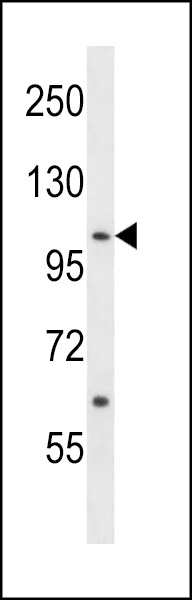
ACK1 Antibody (Center Y284)
Affinity Purified Rabbit Polyclonal Antibody (Pab)
- SPECIFICATION
- CITATIONS
- PROTOCOLS
- BACKGROUND

Application 
| WB, E |
|---|---|
| Primary Accession | Q07912 |
| Other Accession | O54967, Q17R13, NP_005772.3, NP_001010938.1 |
| Reactivity | Human |
| Predicted | Bovine, Mouse |
| Host | Rabbit |
| Clonality | Polyclonal |
| Isotype | Rabbit IgG |
| Calculated MW | 114569 Da |
| Antigen Region | 265-290 aa |
| Gene ID | 10188 |
|---|---|
| Other Names | Activated CDC42 kinase 1, ACK-1, Tyrosine kinase non-receptor protein 2, TNK2, ACK1 |
| Target/Specificity | This ACK1 antibody is generated from rabbits immunized with a KLH conjugated synthetic peptide between 265-290 amino acids from the Central region of human ACK1. |
| Dilution | WB~~1:1000 |
| Format | Purified polyclonal antibody supplied in PBS with 0.09% (W/V) sodium azide. This antibody is purified through a protein A column, followed by peptide affinity purification. |
| Storage | Maintain refrigerated at 2-8°C for up to 2 weeks. For long term storage store at -20°C in small aliquots to prevent freeze-thaw cycles. |
| Precautions | ACK1 Antibody (Center Y284) is for research use only and not for use in diagnostic or therapeutic procedures. |
| Name | TNK2 |
|---|---|
| Synonyms | ACK1 |
| Function | Non-receptor tyrosine-protein and serine/threonine-protein kinase that is implicated in cell spreading and migration, cell survival, cell growth and proliferation. Transduces extracellular signals to cytosolic and nuclear effectors. Phosphorylates AKT1, AR, MCF2, WASL and WWOX. Implicated in trafficking and clathrin-mediated endocytosis through binding to epidermal growth factor receptor (EGFR) and clathrin. Binds to both poly- and mono-ubiquitin and regulates ligand-induced degradation of EGFR, thereby contributing to the accumulation of EGFR at the limiting membrane of early endosomes. Downstream effector of CDC42 which mediates CDC42-dependent cell migration via phosphorylation of BCAR1. May be involved both in adult synaptic function and plasticity and in brain development. Activates AKT1 by phosphorylating it on 'Tyr-176'. Phosphorylates AR on 'Tyr-267' and 'Tyr-363' thereby promoting its recruitment to androgen-responsive enhancers (AREs). Phosphorylates WWOX on 'Tyr-287'. Phosphorylates MCF2, thereby enhancing its activity as a guanine nucleotide exchange factor (GEF) toward Rho family proteins. Contributes to the control of AXL receptor levels. Confers metastatic properties on cancer cells and promotes tumor growth by negatively regulating tumor suppressor such as WWOX and positively regulating pro-survival factors such as AKT1 and AR. Phosphorylates WASP (PubMed:20110370). |
| Cellular Location | Cell membrane. Nucleus. Endosome {ECO:0000250|UniProtKB:O54967} Cell junction, adherens junction. Cytoplasmic vesicle membrane; Peripheral membrane protein; Cytoplasmic side. Cytoplasmic vesicle, clathrin-coated vesicle Membrane, clathrin-coated pit. Cytoplasm, perinuclear region. Cytoplasm, cytosol {ECO:0000250|UniProtKB:O54967}. Note=The Tyr-284 phosphorylated form is found both in the membrane and nucleus (By similarity). Co-localizes with EGFR on endosomes (PubMed:20333297). Nuclear translocation is CDC42-dependent (By similarity). Detected in long filamentous cytosolic structures where it co-localizes with CTPS1 (By similarity) {ECO:0000250|UniProtKB:O54967, ECO:0000269|PubMed:20333297} |
| Tissue Location | The Tyr-284 phosphorylated form shows a significant increase in expression in breast cancers during the progressive stages i.e. normal to hyperplasia (ADH), ductal carcinoma in situ (DCIS), invasive ductal carcinoma (IDC) and lymph node metastatic (LNMM) stages. It also shows a significant increase in expression in prostate cancers during the progressive stages. |

Thousands of laboratories across the world have published research that depended on the performance of antibodies from Abcepta to advance their research. Check out links to articles that cite our products in major peer-reviewed journals, organized by research category.
info@abcepta.com, and receive a free "I Love Antibodies" mug.

Provided below are standard protocols that you may find useful for product applications.
Background
This gene encodes a tyrosine kinase that binds Cdc42Hs in its GTP-bound form and inhibits both the intrinsic and GTPase-activating protein (GAP)-stimulated GTPase activity of Cdc42Hs. This binding is mediated by a unique sequence of 47 amino acids C-terminal to an SH3 domain. The protein may be involved in a regulatory mechanism that sustains the GTP-bound active form of Cdc42Hs and which is directly linked to a tyrosine phosphorylation signal transduction pathway. Several alternatively spliced transcript variants have been identified from this gene, but the full-length nature of only two transcript variants has been determined.
References
Mahajan, K., et al. J. Cell. Physiol. 224(2):327-333(2010)
Chua, B.T., et al. Mol Oncol 4(4):323-334(2010)
Prieto-Echague, V., et al. J. Biol. Chem. 285(14):10605-10615(2010)
Lin, Q., et al. Mol. Cell. Biol. 30(6):1541-1554(2010)
Pao-Chun, L., et al. J. Biol. Chem. 284(50):34954-34963(2009)

If you have used an Abcepta product and would like to share how it has performed, please click on the "Submit Review" button and provide the requested information. Our staff will examine and post your review and contact you if needed.
If you have any additional inquiries please email technical services at tech@abcepta.com.

Ordering Information
Other Products
Shipping Information
