






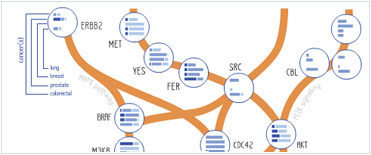








 Foundational characteristics of cancer include proliferation, angiogenesis, migration, evasion of apoptosis, and cellular immortality. Find key markers for these cellular processes and antibodies to detect them.
 The SUMOplot™ Analysis Program predicts and scores sumoylation sites in your protein. SUMOylation is a post-translational modification involved in various cellular processes, such as nuclear-cytosolic transport, transcriptional regulation, apoptosis, protein stability, response to stress, and progression through the cell cycle.
 The Autophagy Receptor Motif Plotter predicts and scores autophagy receptor binding sites in your protein. Identifying proteins connected to this pathway is critical to understanding the role of autophagy in physiological as well as pathological processes such as development, differentiation, neurodegenerative diseases, stress, infection, and cancer.
CD9 Antibody (N-term)
Purified Rabbit Polyclonal Antibody (Pab)
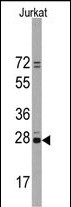
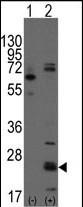
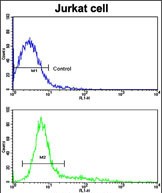
- SPECIFICATION
- CITATIONS: 2
- PROTOCOLS
- BACKGROUND

Application 
| WB, FC, E |
|---|---|
| Primary Accession | P21926 |
| Reactivity | Human |
| Host | Rabbit |
| Clonality | Polyclonal |
| Isotype | Rabbit IgG |
| Calculated MW | 25416 Da |
| Antigen Region | 21-51 aa |
| Gene ID | 928 |
|---|---|
| Other Names | CD9 antigen, 5H9 antigen, Cell growth-inhibiting gene 2 protein, Leukocyte antigen MIC3, Motility-related protein, MRP-1, Tetraspanin-29, Tspan-29, p24, CD9, CD9, MIC3, TSPAN29 |
| Target/Specificity | This CD9 antibody is generated from rabbits immunized with a KLH conjugated synthetic peptide between 21-51 amino acids of human CD9. |
| Dilution | WB~~1:1000 FC~~1:10~50 |
| Format | Purified polyclonal antibody supplied in PBS with 0.09% (W/V) sodium azide. This antibody is prepared by Saturated Ammonium Sulfate (SAS) precipitation followed by dialysis against PBS. |
| Storage | Maintain refrigerated at 2-8°C for up to 2 weeks. For long term storage store at -20°C in small aliquots to prevent freeze-thaw cycles. |
| Precautions | CD9 Antibody (N-term) is for research use only and not for use in diagnostic or therapeutic procedures. |
| Name | CD9 {ECO:0000303|PubMed:1840589, ECO:0000312|HGNC:HGNC:1709} |
|---|---|
| Function | Integral membrane protein associated with integrins, which regulates different processes, such as sperm-egg fusion, platelet activation and aggregation, and cell adhesion (PubMed:8478605, PubMed:14575715, PubMed:18541721). Present at the cell surface of oocytes and plays a key role in sperm-egg fusion, possibly by organizing multiprotein complexes and the morphology of the membrane required for the fusion (By similarity). In myoblasts, associates with CD81 and PTGFRN and inhibits myotube fusion during muscle regeneration (By similarity). In macrophages, associates with CD81 and beta-1 and beta-2 integrins, and prevents macrophage fusion into multinucleated giant cells specialized in ingesting complement-opsonized large particles (PubMed:12796480). Also prevents the fusion between mononuclear cell progenitors into osteoclasts in charge of bone resorption (By similarity). Acts as a receptor for PSG17 (By similarity). Involved in platelet activation and aggregation (PubMed:18541721). Regulates paranodal junction formation (By similarity). Involved in cell adhesion, cell motility and tumor metastasis (PubMed:8478605, PubMed:7511626). |
| Cellular Location | Cell membrane; Multi-pass membrane protein. Membrane; Multi-pass membrane protein. Secreted, extracellular exosome {ECO:0000250|UniProtKB:P40240}. Note=Present at the cell surface of oocytes. Accumulates in the adhesion area between the sperm and egg following interaction between IZUMO1 and its receptor IZUMO1R/JUNO {ECO:0000250|UniProtKB:P40240} |
| Tissue Location | Detected in platelets (at protein level) (PubMed:19640571). Expressed by a variety of hematopoietic and epithelial cells (PubMed:19640571). |

Provided below are standard protocols that you may find useful for product applications.
Background
CD9 is a member of the transmembrane 4 superfamily, also known as the tetraspanin family. Most of these members are cell-surface proteins that are characterized by the presence of four hydrophobic domains. The proteins mediate signal transduction events that play a role in the regulation of cell development, activation, growth and motility. This protein is a cell surface glycoprotein that is known to complex with integrins and other transmembrane 4 superfamily proteins. It can modulate cell adhesion and migration and also trigger platelet activation and aggregation. In addition, the protein appears to promote muscle cell fusion and support myotube maintenance.
References
Ovalle,S., Int. J. Cancer 121 (10), 2140-2152 (2007)
Kovalenko,O.V., Mol. Cell Proteomics 6 (11), 1855-1867 (2007)
Abache,T., J. Cell. Biochem. 102 (3), 650-664 (2007)
Horejsi,V., FEBS Lett. 288 (1-2), 1-4 (1991)

If you have used an Abcepta product and would like to share how it has performed, please click on the "Submit Review" button and provide the requested information. Our staff will examine and post your review and contact you if needed.
If you have any additional inquiries please email technical services at tech@abcepta.com.

Ordering Information
Other Products
Shipping Information
