






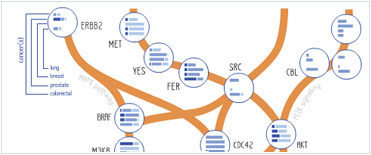








 Foundational characteristics of cancer include proliferation, angiogenesis, migration, evasion of apoptosis, and cellular immortality. Find key markers for these cellular processes and antibodies to detect them.
 The SUMOplot™ Analysis Program predicts and scores sumoylation sites in your protein. SUMOylation is a post-translational modification involved in various cellular processes, such as nuclear-cytosolic transport, transcriptional regulation, apoptosis, protein stability, response to stress, and progression through the cell cycle.
 The Autophagy Receptor Motif Plotter predicts and scores autophagy receptor binding sites in your protein. Identifying proteins connected to this pathway is critical to understanding the role of autophagy in physiological as well as pathological processes such as development, differentiation, neurodegenerative diseases, stress, infection, and cancer.
ACE2 (SARS Receptor) Antibody (C-term) Blocking Peptide
Synthetic peptide
- SPECIFICATION
- CITATIONS
- PROTOCOLS
- BACKGROUND
| Primary Accession | Q9BYF1 |
|---|---|
| Clone Names | 3102405 |
| Gene ID | 59272 |
|---|---|
| Other Names | Angiotensin-converting enzyme 2, ACE-related carboxypeptidase, Angiotensin-converting enzyme homolog, ACEH, Metalloprotease MPROT15, Processed angiotensin-converting enzyme 2, ACE2 |
| Target/Specificity | The synthetic peptide sequence used to generate the antibody AP6020e was selected from the SARS region of human ACE2 (SARS Receptor) . A 10 to 100 fold molar excess to antibody is recommended. Precise conditions should be optimized for a particular assay. |
| Format | Peptides are lyophilized in a solid powder format. Peptides can be reconstituted in solution using the appropriate buffer as needed. |
| Storage | Maintain refrigerated at 2-8°C for up to 6 months. For long term storage store at -20°C. |
| Precautions | This product is for research use only. Not for use in diagnostic or therapeutic procedures. |
| Name | ACE2 (HGNC:13557) |
|---|---|
| Function | Essential counter-regulatory carboxypeptidase of the renin- angiotensin hormone system that is a critical regulator of blood volume, systemic vascular resistance, and thus cardiovascular homeostasis (PubMed:27217402). Converts angiotensin I to angiotensin 1- 9, a nine-amino acid peptide with anti-hypertrophic effects in cardiomyocytes, and angiotensin II to angiotensin 1-7, which then acts as a beneficial vasodilator and anti-proliferation agent, counterbalancing the actions of the vasoconstrictor angiotensin II (PubMed:10969042, PubMed:10924499, PubMed:11815627, PubMed:19021774, PubMed:14504186). Also removes the C-terminal residue from three other vasoactive peptides, neurotensin, kinetensin, and des-Arg bradykinin, but is not active on bradykinin (PubMed:10969042, PubMed:11815627). Also cleaves other biological peptides, such as apelins (apelin-13, [Pyr1]apelin-13, apelin-17, apelin-36), casomorphins (beta-casomorphin- 7, neocasomorphin) and dynorphin A with high efficiency (PubMed:11815627, PubMed:27217402, PubMed:28293165). In addition, ACE2 C-terminus is homologous to collectrin and is responsible for the trafficking of the neutral amino acid transporter SL6A19 to the plasma membrane of gut epithelial cells via direct interaction, regulating its expression on the cell surface and its catalytic activity (PubMed:18424768, PubMed:19185582). |
| Cellular Location | [Processed angiotensin-converting enzyme 2]: Secreted [Isoform 2]: Apical cell membrane |
| Tissue Location | Expressed in endothelial cells from small and large arteries, and in arterial smooth muscle cells (at protein level) (PubMed:15141377). Expressed in enterocytes of the small intestine, Leydig cells and Sertoli cells (at protein level) (PubMed:15141377) Expressed in the renal proximal tubule and the small intestine (at protein level) (PubMed:18424768). Expressed in heart, kidney, testis, and gastrointestinal system (at protein level) (PubMed:10969042, PubMed:10924499, PubMed:15231706, PubMed:12459472, PubMed:15671045, PubMed:32715618, PubMed:32170560). In lung, expressed at low levels in some alveolar type 2 cells, the expression seems to be individual- specific (at protein level) (PubMed:32425701, PubMed:15141377, PubMed:32715618, PubMed:32170560, PubMed:33432184). Expressed in nasal epithelial cells (at protein level) (PubMed:33432184, PubMed:32333915) Coexpressed with TMPRSS2 within some lung alveolar type 2 cells, ileal absorptive enterocytes, intestinal epithelial cells, cornea, gallbladder and nasal goblet secretory cells (PubMed:32413319, PubMed:32327758, PubMed:32358202). Coexpressed with TMPRSS4 within mature enterocytes (PubMed:32404436). |

Thousands of laboratories across the world have published research that depended on the performance of antibodies from Abcepta to advance their research. Check out links to articles that cite our products in major peer-reviewed journals, organized by research category.
info@abcepta.com, and receive a free "I Love Antibodies" mug.

Provided below are standard protocols that you may find useful for product applications.
Background
ACE2 cDNA encodes a deduced 805-amino acid protein containing a potential 17-amino acid N-terminal signal peptide and a putative 22-amino acid C-terminal membrane anchor. It also possesses a zinc metalloprotease consensus sequence and a conserved glutamine residue that may function as a third zinc ligand. ACE2 is expressed predominantly in vascular endothelial cells of the heart and kidney. ACE converts angiotensin I to angiotensin II, ACE2 converts angiotensin I to angiotensin 1-9, which has 9 amino acids. Angiotensin II is a potent blood vessel constrictor, while angiotensin 1-9 does not impact blood vessels but is cleaved by ACE to a shorter peptide, angiotensin 1-7, which is a blood vessel dilator. Spike (S) proteins of coronaviruses, including the SARS coronavirus, bind with cellular receptors to mediate infection of target cells. ACE2 binds the S1 domain of the SARS coronavirus S protein. SARS coronavirus replicates efficiently on ACE2-transfected but not mock-transfected 293T cells. Anti-ACE2 but not anti-ACE1 antibody blocks viral replication on Vero E6 cells. It has been proposed that ACE2 is a functional receptor for SARS coronavirus.

If you have used an Abcepta product and would like to share how it has performed, please click on the "Submit Review" button and provide the requested information. Our staff will examine and post your review and contact you if needed.
If you have any additional inquiries please email technical services at tech@abcepta.com.

Ordering Information
Other Products
Shipping Information
